Showing posts with label Travel. Show all posts

Wednesday, 22 November 2017

Athens

Five days in Athens in November - what an opportunity.  I was asked to go to a conference from the Sunday evening to the Tuesday afternoon and flight times meant the easiest solution was to fly out  on Saturday and back on Wednesday.  This meant I had Sunday for sightseeing.  I flew with Easyjet and all went well with arrangements.

First off I arrived at Athens Airport about 8:30 and debated whether I should get a taxi (€38) or the metro (€10) in to my hotel.  As usual I had used Google Maps to check out the route from the metro to the hotel as, despite good instructions from the conference organisers, I know all too well how a "gentle slope" can in fact be insurmountable in a wheelchair.  I had mixed feelings on whether I could easily get to the hotel as I was fairly well loaded down - with my carryon bag on the front, freewheel stowed on the back and my carry on bag on my lap.

The metro ticket office said there was no charge for me so I went with that.  What a pleasant surprise - it's a brand new metro so every single station is fully accessible and in all my travels I saw no more than a 3cm gap between train and platform.  The norm was a much, much smaller gap.  Don't mind the gap.  There isn't one.


When I got to the Megaro Mousikis station, near my hotel, I could see it was a gentle downhill slope to my hotel so opted to walk, which was fine apart from dodgy the branches of an orange tree (complete with oranges) and a few detours for dropped kerbs.  Hotel was lovely, room was nice and accessible, but the lift doors were only about 70cm wide - I had to remove the silicon grips from my push rims to fit in one!

Sunday morning I got up early and had the most ridiculously generous breakfast in my room - for a €3 surcharge over breakfast in the dining room. Conveniently this avoided dealing with the stairs to the dining room.  Each morning I would tick fewer boxes on the menu and still get more than I could eat.  By the time I left I had an impressively stocked fruit bowl in my room. Really all I wanted was a piece of fruit, some Greek yoghurt and honey and a couple of pastries.

I headed back to the metro station, feeling much more confident about using it, to discover the Athens Classic Marathon underway.  You know - the one that actually starts at Marathon and finishes in the ancient Panathenaic Stadium.  I managed to find a gap in the runners (who were going pretty slowly, it being the 40km mark) to cross to the metro station's lift and headed off.


First stop on my itinerary was the Acropolis museum - built to house the Elgin Marbles should they ever be returned.  It's an amazing museum, taking you up through the different periods of Athenian history with well chosen examples of each periods treasures.  Given the sheer quantity of archaeological treasures in Athens - they even have mini-museums in many of the metro stations - it could have ended up looking like your Granny's attic.  Instead it's light and airy and everything is well displayed.  The top floor is constructed to the exact dimensions of the Parthenon, which overlooks it.  There are spaces for each of the panels currently in the British Museum.  It really is where they should be.  No photos allowed, though.  Apart from of the Lego version.


Slight comedy moment at the entrance:

Me:  One adult please
Cashier:  Oh, you are free, do you have proof of the percentage of your disability?
Me:  Um, no.
Cashier, looking me up and down:  Can you walk?
Me: A little, a few metres at most.
Cashier, handing me a ticket:  I guess you must qualify, no charge.

Note to others:  Take your Blue Badge or similar to Greece with you!

Next up - I'd heard from friends that there is a lift up to the Acropolis itself.  Keen to add another site to my list of "World Heritage Sites I've been in a lift in", I started wheeling myself up.  It was a warm day, at least for someone who lives in Scotland.  The Athenians were in coats and hats.  I was in a summer dress and knee length leggings.  The first stage was a gentle hill with marble pavements.  I well recommend marble as an outdoor wheeling surface.  Effortless. 


Next up was a steeper hill with what were basically marble cobbles and poorly grouted.  Very hard work, with zig-zagging not really helping because it just made it more likely the wheels would get stuck.  I accepted a few offers for help on steeper bits, but only for a few minutes lest my helper expired.  Eventually reached the ticket area, over halfway up the Acropolis hill, to discover that whilst there is indeed a lift there is also a ramp (I think they mean one of those platform lifts) which was out of order.  So I didn't get my trip to the top.  I got pretty close though.


The climb was well worth it though as I went down the north side of the hill - much steeper but more interesting.  Including this view over the Ancient Agora.


After some detours when streets turned out to be staircases, I made it down to Monastiraki, which is very much tourist central of Athens.  Lots of little lanes with small shops, some of which I could even get into, interspersed with ruins from various periods. 


It's a fun place just to walk around, people watch and see what's around the next corner. 


Being Sunday there was a flea market on.  I worked my way down through the tiny streets to Thissiou station, where I wandered a wee way up the Apostolou Pavlou Avenue, a walking route through the centre of Athens which is a much more sensible route from the Acropolis Museum than the one I had taken. There was a great view here of the Temple of Hephaestus (which I'd seen from the Acropolis earlier) but by this time I was too tired to attempt to get closer to it - and it was time for me to head for the start of my conference.

Monday, 21 August 2017

New Lanark World Heritage Site - Oh what a steep ramp you have.

The not-so-small boy and I have been enjoying the last few days of his school holidays.  Since schools in our area go back later than elsewhere in Scotland, it's a good time to do touristy things, as long as we avoid Edinburgh which is inevitably a zoo in August.

Today we went to New Lanark, which I have wanted to go to for years.  It's the second time recently I've been somewhere in that part of Scotland and been thoroughly disappointed.  I suspect the same architects may be involved.

New Lanark probably thinks it is accessible.  Access throughout the indoor exhibits is via ramps - all the way up five levels of mill buildings and all the way back down again.  Unfortunately this means the ramps are steep.  I'm not easily bettered by a ramp or a hill.  But I don't like to constantly be fighting that tipping feeling you get on a ramp that's just about too steep.  Especially when it's a long one.  I needed help more than once and anyone who knows me knows how much I hate that.


Coming down the way was almost as bad.  No tipping feeling but that constant almost out of control feeling and blisters on the thumbs from gripping the push rims.  Luckily it was fairly empty or I might have taken someone out.  This ramp between the two buildings gives you an idea of what it's like - though some sections were steeper, some had slopes round corners.  None had decent handrails.

There are lifts.  With a bit of thought, and maybe a couple of platform lifts, the routes through the building could be adjusted to be level, with lifts between floors, most of the way through.  Yes, this is an historic building on a steep site but they have the lifts already.

Instead, when you get to the bottom you're faced with a push up a roadway (access to the adjacent hotel) as you're not even allowed to go backwards through the exhibits to get to the main entrance.

Most of the external buildings (workers house, shop, Robert Owen's house, school) require assistance due to the steep roads.

Oh and it's probably not worth the 20 quid it cost the two of us.

Thursday, 27 July 2017

Camping

I find camping holidays very relaxing.  The level of expectation, in all sorts of ways, is so much lower.  You're not expected to be glamorous, dress up or wear make up.  You're not required to be anywhere, at any time, for the most part.  You don't need to eat particular things at particular times.  As I say, it's relaxing.

French campsites, and I suspect others on the continent, are also fantastic for children.  So many activities available.  Plenty of other children around.  Safety and freedom.  Also, cheap wine. 

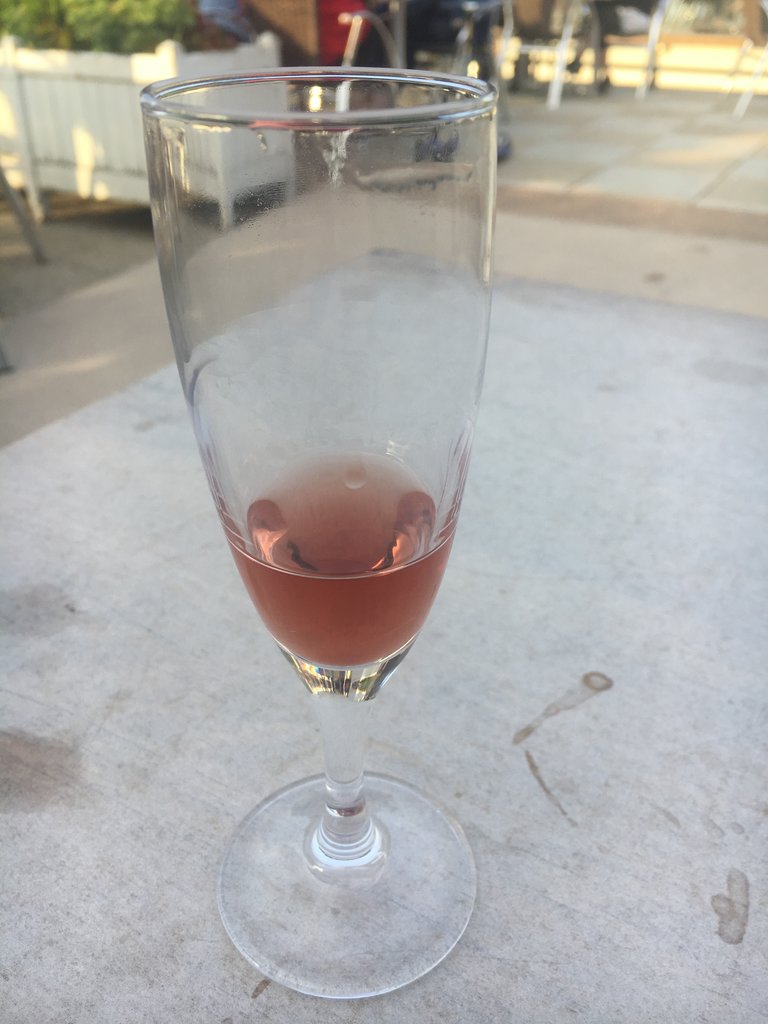
A glass of kir, nearly empty


The last few trips we have been at large sites with lots of activities.  The not-so-small boy enjoys water slides and swimming pools and can spend hours entertaining himself on them, so that is a priority.  As he gets bigger, things like zip wires and ropes courses appeal more and more.  

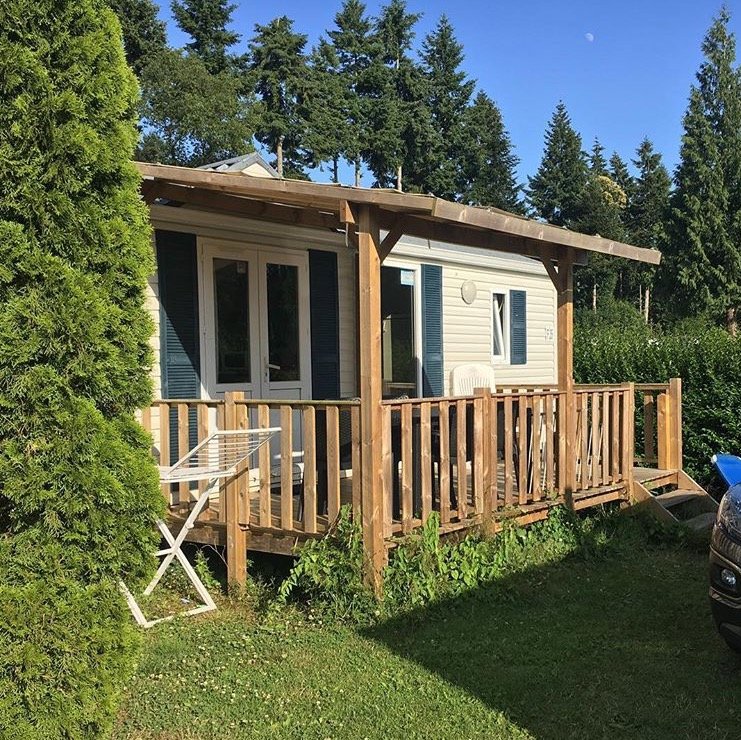
This year's trip to Les Ormes worked out really well.  We went with Al Fresco, because we could use Tesco Clubcard vouchers in part payment (we've previously booked with Siblu on the same basis).  As we booked late, we ended up with a 3 bedroom mobile home.  It had a deck with a canopy and plenty of space.  This year's example was a bit more dated, a bit more tatty, than previous examples, but very comfortable.  We didn't have a wheelchair accessible mobile home (I can manage the two or three steps into a standard one and can walk the short distances inside).  Wheelchair adapted accommodation is available from Al Fresco, Siblu and Eurocamp at other sites. 

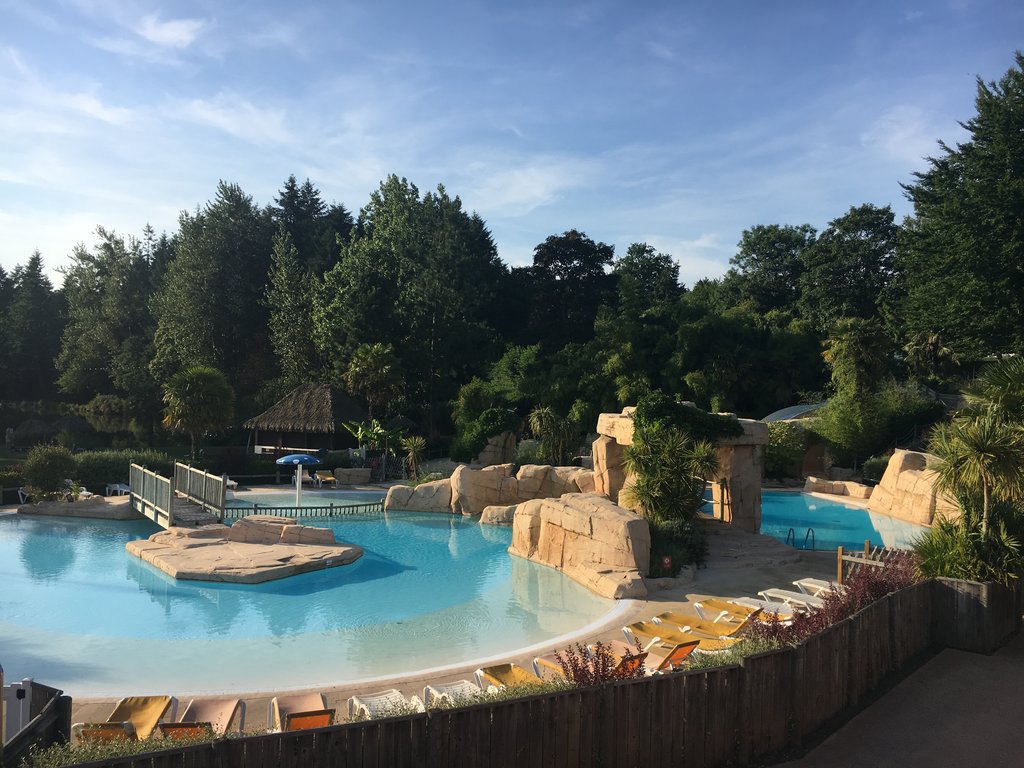
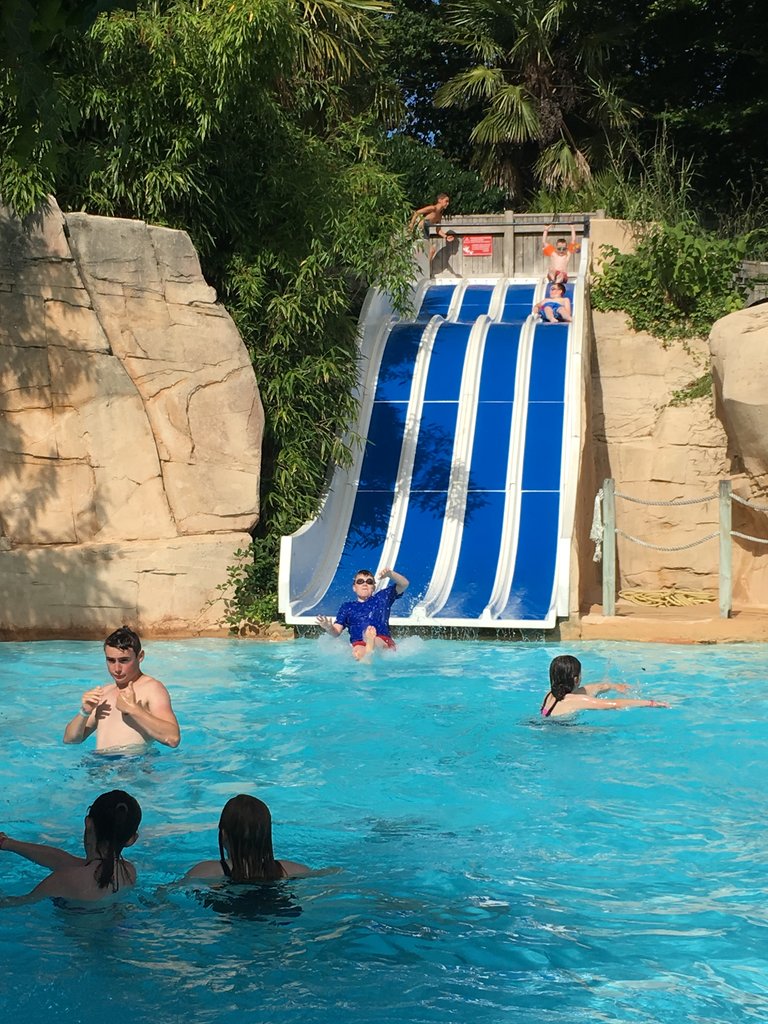
The campsite facilities were great - two pool areas, both with a range of slides, shallow and deeper areas and loungers.  Inevitably there were not enough loungers, but we discovered that if we headed down about four o'clock, people were starting to leave.   Since it was very warm and I had an injured elbow, I had a brief swim to cool off them enjoyed reading in the sun while the boy swam.  


We also enjoyed the pizza place onsite, the market on Tuesday evening, the "Pink Cabana" which served crepes, waffles and ice cream.  
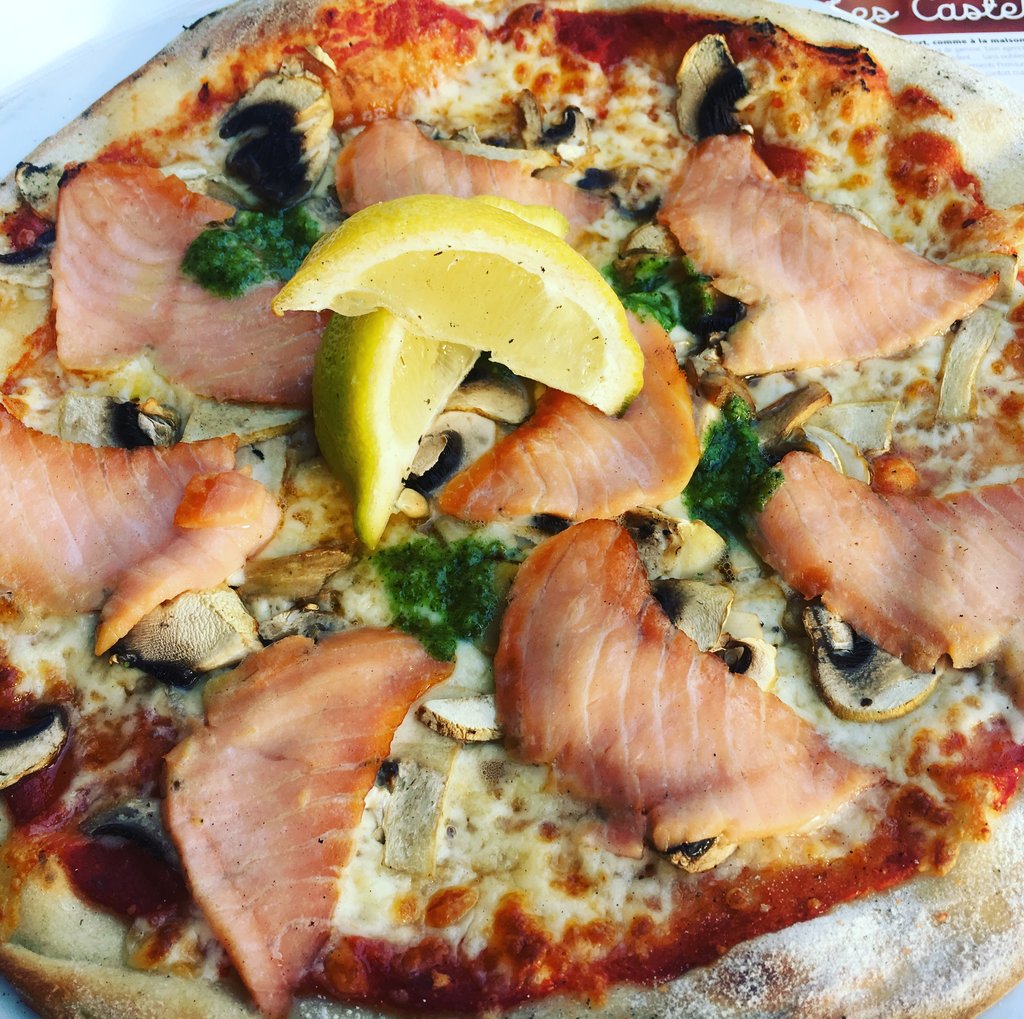
Pizza with smoked salmon


The boy went down to the play ground and football area in the evenings and made a few friends.  He had a number of goes on the zipwire (€6 for two goes) and the ropes courses (€13 for two goes). 

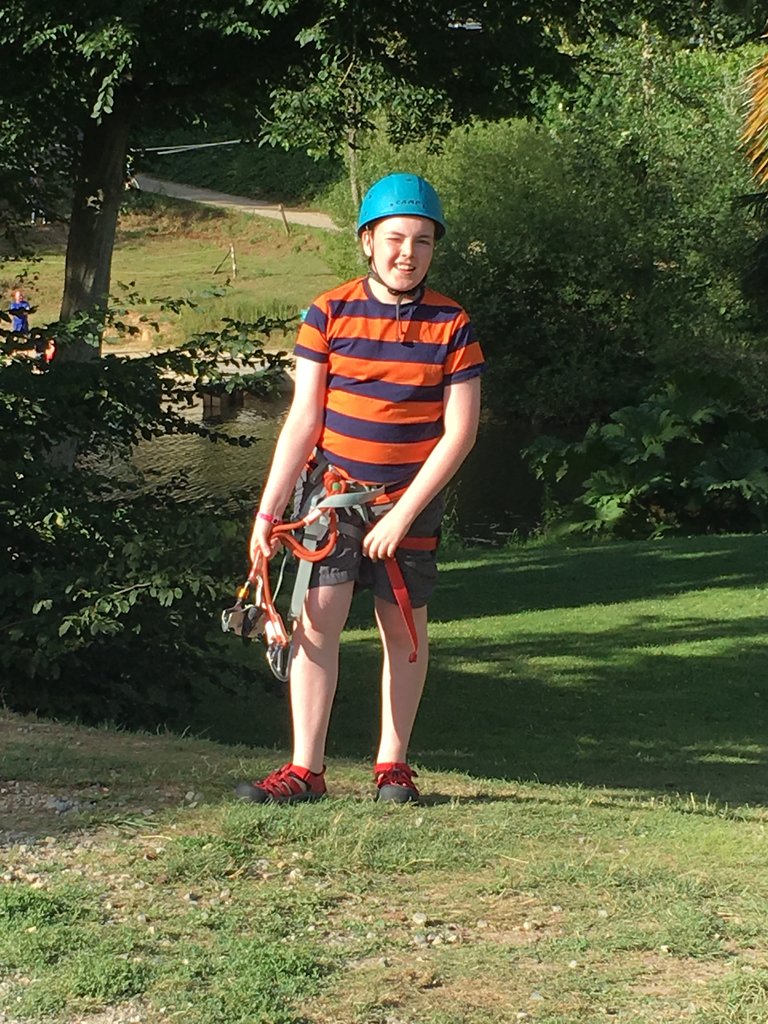
Boy in rope course/zip wire gear   
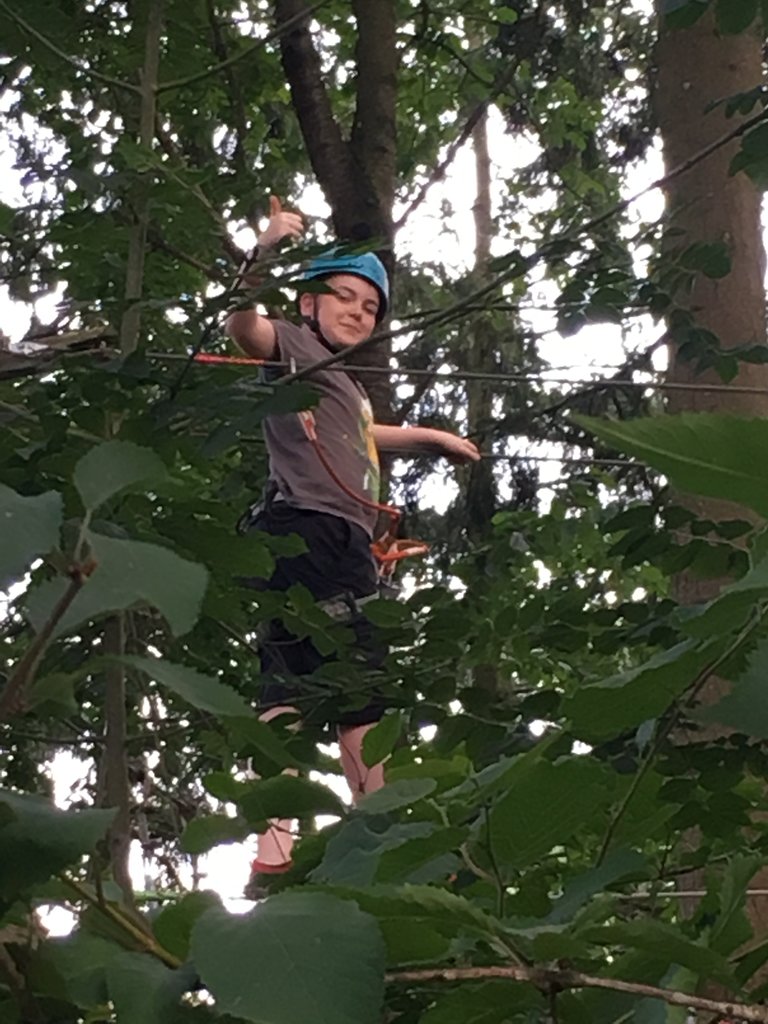
Boy in trees


Once again, despite my hopes, the kids' club provided by Al Fresco (with Eurocamp) didn't prove to be a success.  This year, the boy was the eldest in his age group and didn't particularly enjoy it.  I'm sure these are great if your kids do enjoy them and, now he's 12, I'm glad that the boy is old enough I get down time without them.  

We did a few side trips from Les Ormes, which I will hopefully get a chance to write about soon. 

Monday, 3 July 2017

France

We're on holiday in France again this year - our usual mix of a little travelling and a spell on a campsite.  This time we're at Les Ormes (aka Domaine des Ormes) on the border of Normandy and Brittany. We'll be spending the next nine nights here:


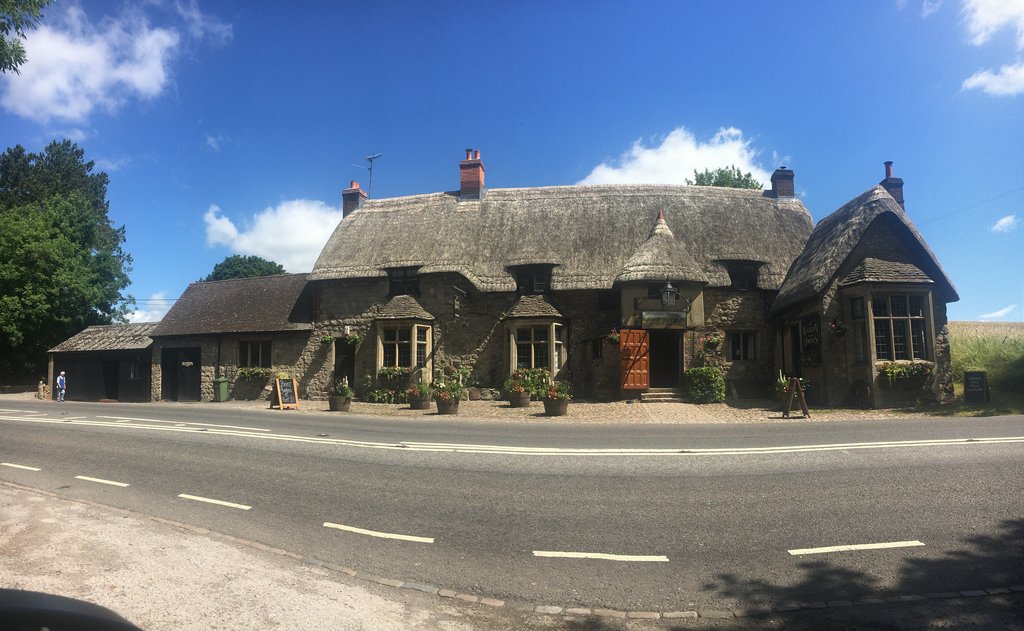
On the way here we spent a couple of nights in Swindon and then last night at a very basic Ibis on the outskirts of Caen (our ferry arrived at 21:30). On our way to the ferry we did very drive by visits to Avebury and Stonehenge.  I did stop to take a picture of this amazing pub. 


Today we did a slightly less drive by visit to Arromanches where we stopped to look at the Mulberry Harbour and saw the Arromanches 360 film which I thought was worth the €6 entry.  Even better, it was free for me due to the wheelchair.  

I used to have a picture of the two of us, taken at Arromanches 7 years ago, on this blog.  I did contemplate recreating it, but we escaped quickly ahead of four coach loads of English school kids.  

For the next few days, the plan is wine, swimming and packing the boy off to kids club. 

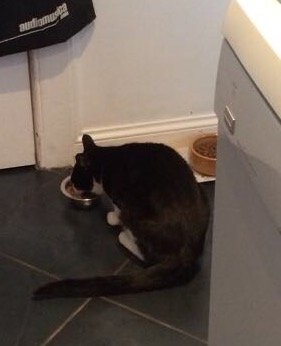
Meanwhile I was pleased to get this picture from my friend who is staying at my house looking after my cats. Dougie has been known to avoid cat sitters for entire holidays.  This time, he's shown up for dinner on day 2. 


Saturday, 24 June 2017

Boaty McBoatface?

As it happened, the same week I was booking that train trip to Durham, I was also booking our summer holiday.  We're off to France again, this time to Brittany, for 12 days on a campsite and then we're having 3 days in Belgium on the way home.  We've a couple of days in the west of England on the way down, catching up with friends, and Brittany Ferries will be taking us from Portsmouth to Caen.  On the way back, we're going from Zeebrugge to Hull with P&O Ferries.

The outward journey is an afternoon sailing but I did contemplate booking a disabled cabin so I could relax comfortably.  It was only £26.  However, I've travelled with them before and I know they do very good, reasonably priced, food.  By the time we've eaten and looked around a bit, there's not enough left of a 6 hour sailing for much of a nap.  So I decided to book recliner seats for us at £5 each.  The online booking portal had a section for me to fill out with my accessibility needs so I completed that and paid for my booking.

Next morning I got a quick call from them, where they confirmed my booking, I checked that I could park the wheelchair and transfer to a comfortable recliner, and they made sure I was aware I need to be there an hour before sailing.

⭐⭐⭐⭐⭐ to Brittany Ferries.

P&O's booking portal was equally helpful.  We're on an overnight ferry coming back, so I pre-booked dinner (so we can maximise our time visiting Bruges during the day) and an accessible cabin.  They didn't call me, they asked me to call them and that's the only thing reason they get a lower rating than Brittany.

⭐⭐⭐⭐ to P&O.

What a difference from the trains.  In both cases they asked all the right questions in a polite and sensitive way.  "Can you transfer yourself?".  "Do you need assistance to get from your car to the lift?"  They made no assumptions of ability or disability and when I explained my needs they seemed to understand them.

Choo choo, I'm a train.

Last week I ventured on a long distance train for the first time.  My office overlooks a train station and I do occasionally find myself pondering the width of the doors and the size of the step down from the train.  Neither reassured me.  Then there were the posts I read on social media and in the press about booked assistance not turning up.  I've seen statistics as high as a 20% failure rate.  I can't image having to commute via train with a wheelchair, when on 2 journeys a week you either can't get on, or can't get off, the train.  And I'm not sure which is worse.  I used to joke that I was worried I'd end up in Penzance.

Anyway, a work trip to Durham, on a Monday at the start of a very busy week, meant there really was no option but the train.

Guess what.  I had to get a  Penzance train.

I managed to book online and using the Cross Country website had, I thought, booked assistance. What I wanted was to put my wheelchair in the luggage area and sit on a seat - lightweight wheelchairs are inherently unstable, that's what you trade for maneuverability.  On a fast, bumpy train that's not ideal.  Were there a way of securing the wheelchair, it would be OK, but there is no way to secure a wheelchair in most train carriages.  The same is true of buses.  20 years ago we had guidance that Wheelchair and Occupant Restraint Systems should be in place on public transport.  Somehow, that has disappeared.

So.  I e-mailed and checked.  No answer.  Then I got three e-mails confirming my assistance for the return journey (which, due to it costing a mere 20p extra, was in first class) but none for the outbound trip.  After more e-mails, in frustration I took to twitter.  Cross Country's PR team claimed that the wheelchair couldn't go as luggage, as it wasn't luggage.  It couldn't go in the bike area, as it wasn't a bike.  It couldn't go in the wheelchair space if I wasn't in it (reasonable).  It seemed like an impasse.  Eventually I phoned the Cross Country assistance team.  They confirmed assistance was booked, at least, and conceded that the wheelchair could go in the luggage area but only if I could stow it and take the wheels off myself as the assistance staff could not board the train.

Monday was D-day.  I was at the station at least half an hour before departure and chatted to a nice woman who was the sole member of staff assisting passengers on a busy mainline station. My train wasn't on the board yet so I said I would wait on the concourse.  25 minutes later, with less than 10 minutes to go and with the colleague I was travelling with having arrived, I asked their gate staff to let the assistance woman know that I was heading down to the platform.  She arrived a couple of minutes later.  I got on the train no problems.

Once on the train I started disassembling the wheelchair, much to the confusion of the Train Manager.  It seems they are very frustrated with what is said by both the PR team and the assistance booking team.  My situation is not unusual (there are a lot of lightweight users out there) and what they advise is to book for Coach D or F.  Then they just wheel the wheelchair through to the luggage area. So now I know for next time.

My journey of course wasn't over.  When we got to Durham there was no sign of the booked assistance.  Virgin East Coast had no record of my request for assistance.  My colleague and a stranger helped me down from the train - just as well or I could have ended up in Penzance after all!

On the way back, I got to the station an hour in advance and, thankfully, everyone had a record of me and I got all the help I needed.  Since the train was quiet, my wheelchair sat in the wheelchair space and I sat in my seat.  I suspect the fact I was in First Class helped.  I hate to say it, but I suspect that's what I'll do in future, if I can.

My assistance failure rate - 25%

Time for a gratuitous use of this wonderful moment in Glasgow.

Thursday, 30 June 2016

Almost but not quite...

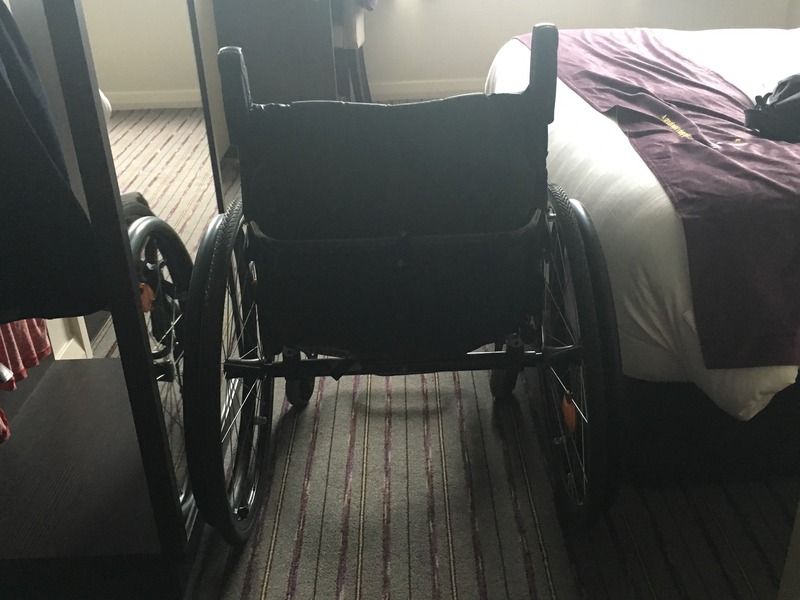
I'm at the Nottingham Human Rights Law Centre Summer School this week and we are staying in a Premier Inn in the centre of Nottingham.  I've been given an accessible room, which usually I don't bother with as I can walk the short distances in a hotel room.

The hotel is almost brand new and very comfortable.  It has a wet room with plenty of hand rails.  The basin is a decent size and there is counter space for toiletries and make up.  There's plenty of space to move around.  All in all the architect designed an accessible room that meets all the right standards but doesn't feel like a public toilet.

And then, I suspect, someone with a bit less knowledge came along to fit it out.


There's a shelf unit (with wheelchair height hanging rail) that sticks out into the room making it very difficult to squeeze a wheelchair through.  They should have put hooks on the wall.  


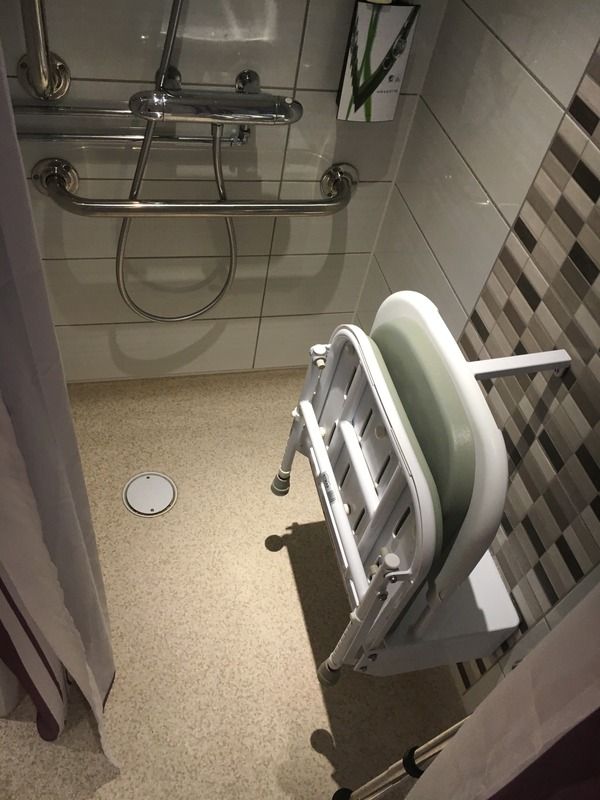
There's a very bulky shower seat in a small but otherwise workable shower area.  It makes it tricky to shower whether or not you're using it.  You can get much smaller ones than this, that take up less space or they could provided a freestanding chair or stool that could be moved out of the way.  

The phenomenon of a building being designed accessible but obstacles being added that reduce accessibility is not limited to hotels.  Shops are really goo at adding free standing displays that block aisles or even the tills!  

Friday, 15 April 2016

Money, money money

We're off to Denmark* on our holidays, so I dug out the Danish coins in our random coins jar.

The small Scottish boy had a look through some of the others - I have lira, Deutschmark, Belgian Franc, Guilder and even some Czechoslovak and Soviet coins (bonus points for having not only currencies which no longer exist, but ones from countries which no longer exist). Also, for some unknown reason, I have about 10Fr in 10 and 20 centime coins.

Anyway, conferred with the Nationalbanken website to see if the Danish coins were still OK. They all are, except the old style 25øre and 5øre but they had been withdrawn in 1991 when I got them.

I don't have any notes, which is good, because they've been replaced twice since I lived there. The new ones have bridges (real ones, not the Euro fake ones) on one side and Viking things on the other.

I was impressed though that the last series (which I'd not really looked at - they were just coming out when I left in 1999) was gender balanced - given the debate about having just one woman (aside from the Queen) on bank notes generates here. There were five notes, so the 1000kr had Anna and Michael Ancher. Karen Blixen, Carl Nielsen, Johanne Luise Heiberg (who was played by Sidse Babett Knudsen in 1864) and Niels Bohr were on the others.

The ones before, the ones I know from living there, are the 1972 series. All but one of those have women on. Prior to that was a portrait series of all men. I do wonder if any other nation has had as many physicists on it's notes - Bohr, Ørsted and Rømer have all featured down the years.

*Yes, I know, Abba are Swedish. Three years of Scandinavian Studies at University here! Our plans also include a quick visit to Sweden one evening for dinner. I've been there just once, for a few hours one Easter Sunday in the 90s. I had no Swedish money with me, but as nothing was open, it didn't matter.

Saturday, 2 April 2016

Belfast

Going through my photographs is a good way of remembering the blog posts I've written in my head but which I've not managed to actually write on screen yet.  This picture was the prompt for my first solo business trip in my new job.


A conference on children's right to play took me to Belfast, by plane.  It was the first time I've travelled completely alone by plane since I got the wheelchair but after last year's Paris trip I wasn't too worried.  It was also great that no one at my work hesitated about me going for a second.  The assumption was that if I thought I could manage, that was fine.  The cup in the picture is from the dinner the night before, which was held at the Titanic Belfast.

I flew across on FlyBe .  Work booked the flight and indicated I need assistance and then the airline contacted us and asked me to complete an information form with the dimensions of my wheelchair (assembled and broken down) and my assistance needs.  It was the first time I've needed to provide so much detail - but it's a pretty small plane.  At both airports (Edinburgh and Belfast City/George Best) I made myself known to the assistance team, confirmed I needed the ambulift as there wouldn't be an airbridge, but wouldn't need the aisle chair (I'm learning the routine!), then said I would meet them at the gate at the agreed time.  They were both fine with this - an improvement from a few years ago when they didn't seem to like you getting out of their control.  

I'd booked late and wasn't able to get into the same hotel as the rest of the conference delegates and with the Premier Inn right by the Titanic Belfast fully booked, picked the Hilton as being the nearest to the airport, Titanic and the right side of the city for the conference venue.  It was slightly dearer than the Premier Inn but not much.  Really spacious hotel room and really accessible while still being comfortable and fully furnished (I once stayed in a room where all the furniture had been removed to make it accessible!)

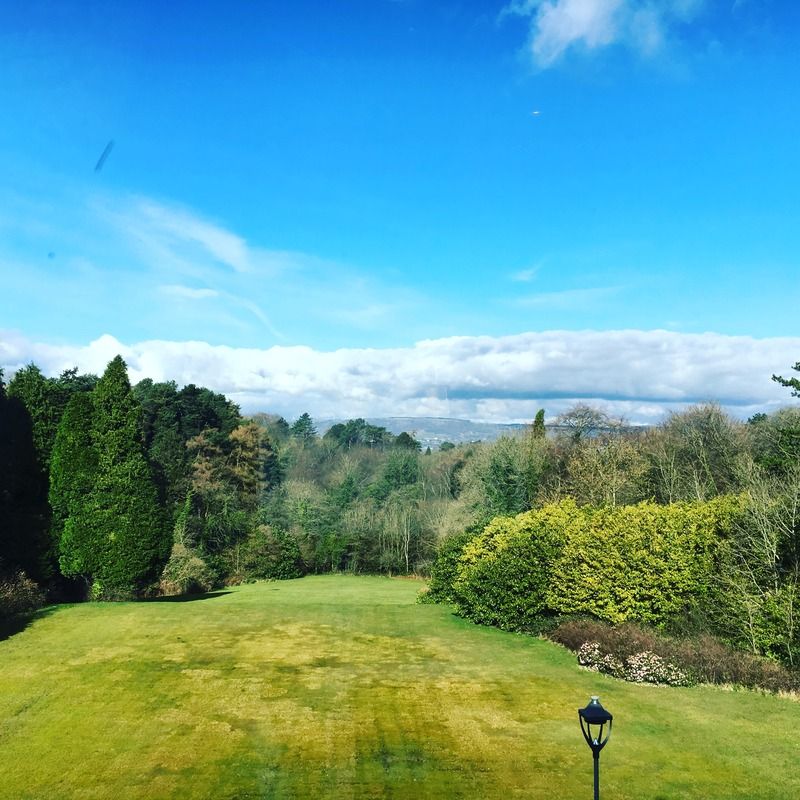
The conference itself was at Cultra Manor, which is within the grounds of the Ulster Folk and Transport Museum (which is a massive site - mostly wooded and very beautiful on a sunny spring day).  It's a lovely venue with good access - nice ramp and a proper lift.  Lovely view across Belfast Lough.


The only disappointment of the trip was the taxis.  I'm used to cities, certainly in Britain, having plenty of London taxis.  It's pretty easy to just lift the chair in.  Private Hire cars are usually hatchbacks or estates, with plenty of room.  However in Belfast most of the taxis were very large, mostly upmarket saloon cars - Audis, Mercedes. VWs.  I discovered that my wheelchair would not fit in an Audi A6's boot, even with the wheels off and the back folded.  There was also a real scarcity of wheelchair accessible taxis.  As a result, I was advised by both the main taxi companies that I would need to request an estate car (station wagon) - at an extra cost of £5.  The Northern Irish contingent at the conference were horrified but it seems there are some ongoing issues with taxi companies treatment of disabled people in Northern Ireland.

Saturday, 9 January 2016

Transport Museums, near and far

One of the things about being the parent of a small boy is that you go to a lot of transport museums. The small Scottish boy's obsession with trains started when he was still a very small Black Country boy and he got his first Thomas the Tank Engine train set, which had a motorised Thomas.  Then we moved to Bo'ness, home of the Bo'ness and Kinneil Railway and the Museum of Scottish Railways,  where we spent many weekend days when he was smaller.  Recently we've been to three transport-related museums, each of which was a different experience.  The first two were on a weekend trip to the north of England with a friend in November.


First up was the big one.  The National Railway Museum at York.  We've been a few times in the past but every visit is different.  It's vast and includes trains from the small to the enormous.

The access is very good.  The ramps are almost all gentle and there is even access up to some of the trains, including inside the bullet train and up to the side of the "Chinese Train" (actually made in the UK, but used in China).  The latter's ramp has a sign warning of a steep slope, but I got up it with not much extra effort.

Sign saying "Caution Steep Ramp" and offering assistance from staff   Doorway to bullet train, with level access and no gap

They'd also made the effort to create complete level access to the inside of the Shinkansen (bullet train - the only one outside Japan) and it was even possible for me to get in there - and have a new pic of me for the blog taken.


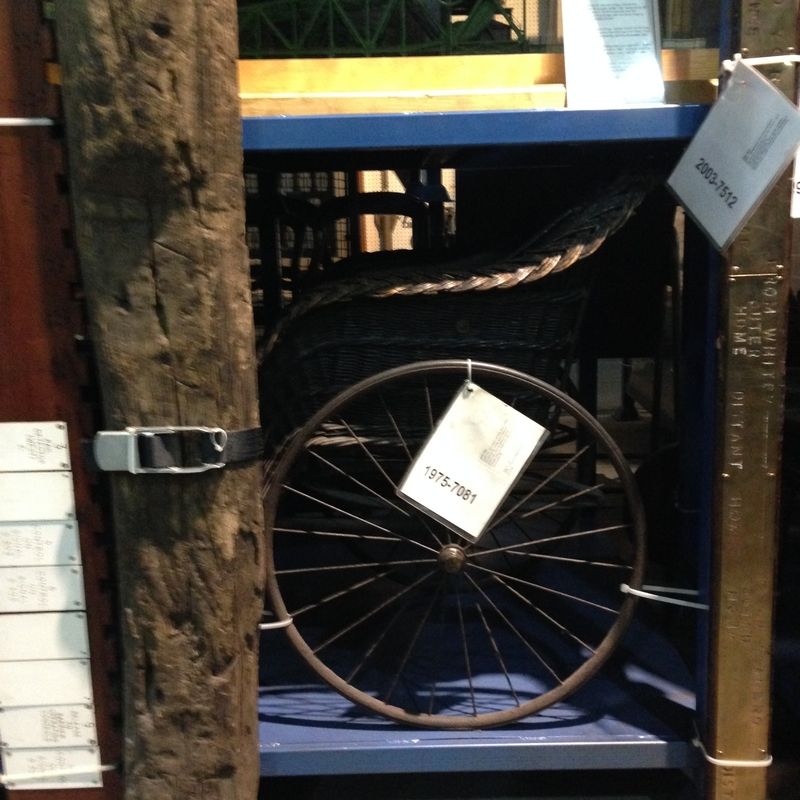
My favourite part of the National Railway Museum is their storage sheds, which are open for the public to look around.  Everything is in there.  Model trains and ships, old signs, furniture, china, equipment, stonework from demolished stations.  This time I spotted a couple of antique wheelchairs.

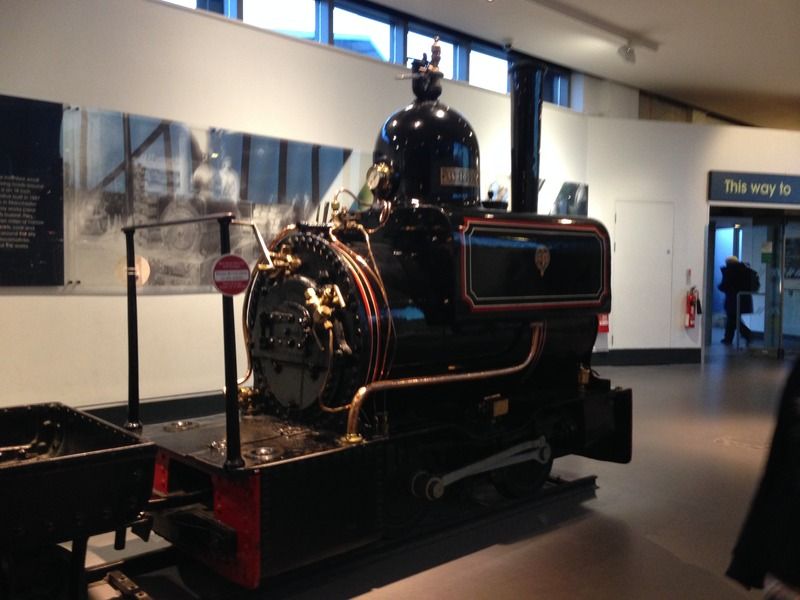
Next day we made a short visit to the Manchester Museum of Science and Industry.  This is based in a disused Victorian train station, but we didn't manage to see all of it, spending a lot of time looking at a weaving demonstration and also eating lunch (excellent pizzas and the salad bar looked great too).  The main engine sheds were closed for refurbishment.  It's split across quite a large site and my only access gripe was that the accessible (tarmac) route across a large cobbled area was laid diagonally intersecting the train lines.  This meant I had to zig zag my way up it to avoid getting my castors stuck between the rails (at York, they put pieces of wood in the gaps to prevent this being an issue).


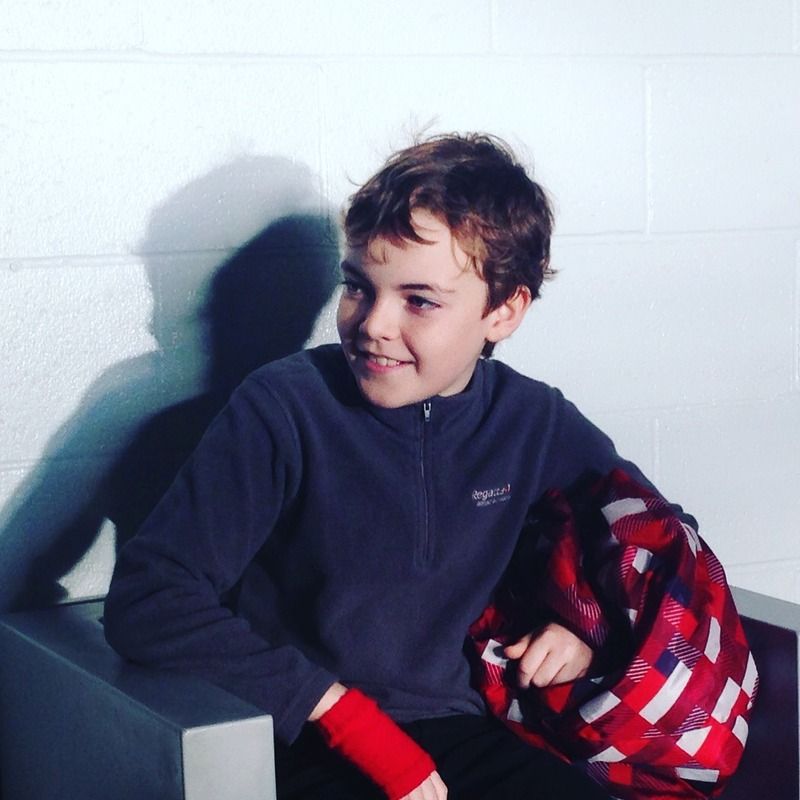
Somehow I only managed to take two photos - Dougal from the Magic Roundabout on a plane and the Small Scottish Boy sitting in the planes and cars building.

The final visit was just before Christmas, when loose brakes on my wheelchair,  meant we were through in Glasgow getting them adjusted (and an annual service for it).  After lunch, given the choice of the Riverside Museum, Kelvingrove Museum and Art Gallery or the People's Palace, the Small Scottish Boy predictably chose the one with the trains.

The Riverside is a relatively new museum in a purpose-built building so it's accessibility is good, aside from the huge paved area in front between the disabled parking and the entrance (which in Glasgow, in December, is not fun!)   Our local hospital features the same huge empty space and I really think it's a problem for ambulant disabled people, especially in our climate. The museum crams a huge amount into a fairly small site, though, and everything inside is accessible and it's easy to see everything without getting tired.  There's even cars and motorbikes on all the walls.  Even the Tall Ship, parked on the Clyde behind the museum, has wheelchair access and a lift!


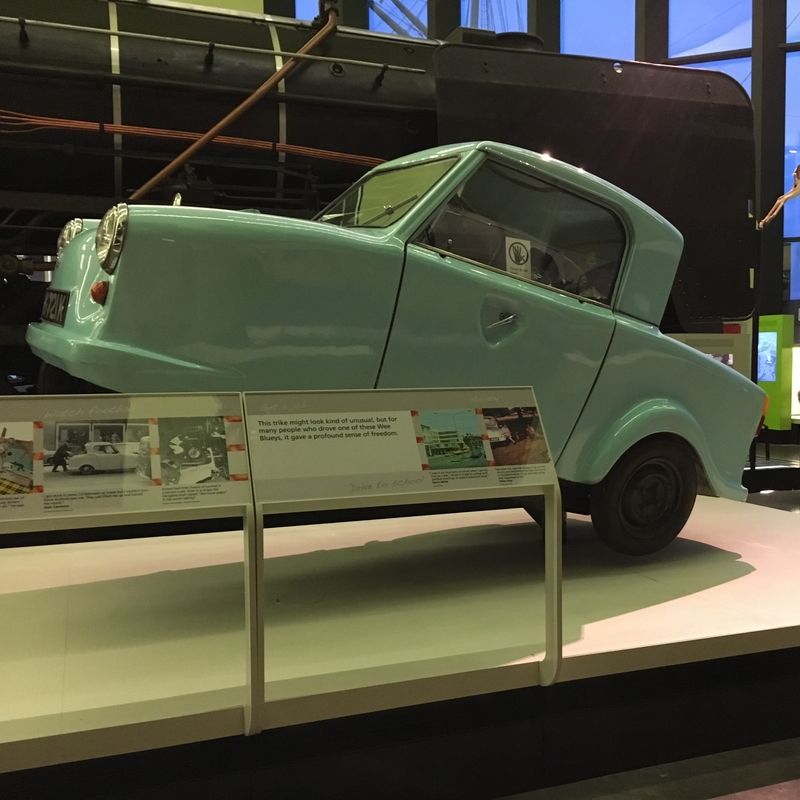
What impressed me on this visit was the increasing visibility of the disabled in the exhibits.  I'd seen the small disabled trike-car (the predecessor of the Motability scheme) on a previous visit but this time noticed they have Glasgow's first disabled accessible taxi on display.  It was first registered in 1988 - the same year as my first car!

The museum also has two streetscapes.  A lengthy two sided street featuring shops from the turn of the 20th century to 1930 and a second from 1930 to 1980.  I love these - there was one at the Auckland War Memorial Museum that was my favourite thing as a child, sadly it was removed just last year.    The early 20th century street had replica flyers up in each window, marking the centenary of the rent strikes organised by Mary Barbour to protest against steep rent increases while many men were serving during World War I.   It was great to see so much social history being explored in a museum I suspect many parents are dragged along to by their train obsessed children. The streets at Riverside also feature the only two Glasgow Subway stations which I can get onto (Glasgow's single line, circular underground railway, with it's tiny trains, is unlikely ever to be accessible).

The great thing at all these museums is that they're all free for everyone.  I think it's great that so much is free here, both Glasgow and Edinburgh have a number of fantastic galleries and museusm and not having to pay to get in is a fantastic way of ensuring they're available to everyone.  I always try to make a donation, since I can afford it, and we are members of the National Museums of Scotland but we more than get our moneys worth from them!


Monday, 14 September 2015

Musée de l'Armistice

One of the other things on my shortlist for the Compiegne area was the Glade of the Armistice and  Musée de l'Armistice - the French national war memorial in the middle of the forest of Compiegne.  It was here that the Armistice was signed in November 1918, in Marechal Foch's private railway carriage.  It was also where the invading Germans had the French sign the surrender in 1940, after which they destroyed the site and had the railway carriage taken to Berlin, where it was destroyed.

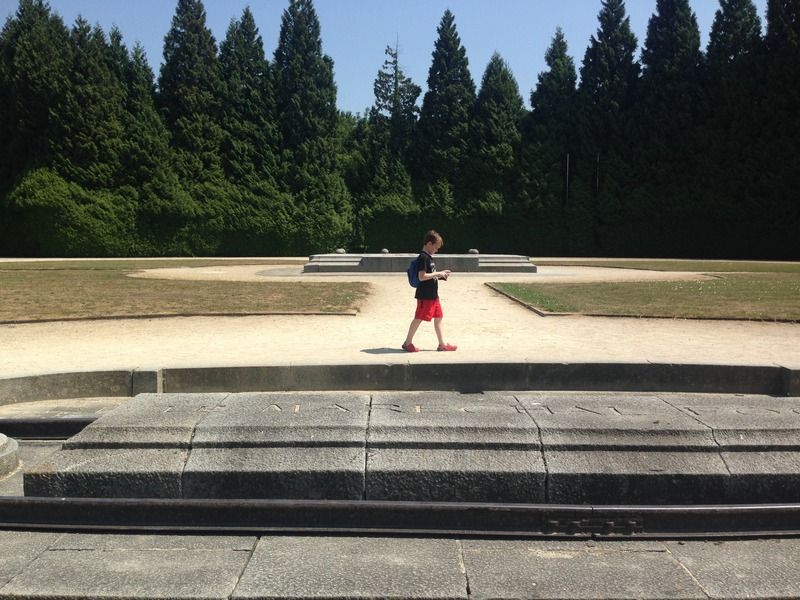
After World War Two the site was restored and another carriage from the same manufacturer was turned into a replica of Foch's carriage.  It's this that you can still see today.  Outside the small but interesting museum, there are a number of memorials related to both World Wars and the location of the tracks and carriages is marked out in stone.


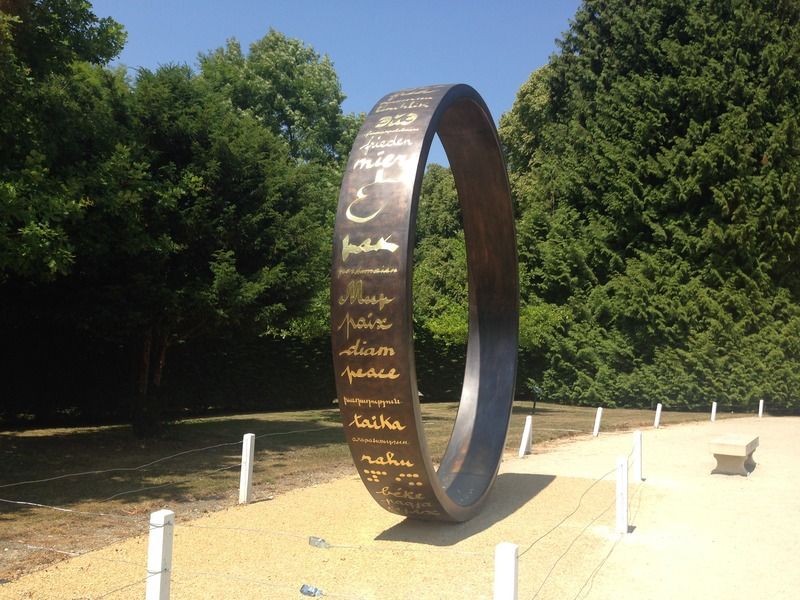
One of the more modern memorials - this one to peace. 


The site is level with fine gravel paths - it's quite a wheel from the car park but completely flat and thankfully shaded - this was the day it hit 40 degrees in Paris!  The museum itself is accessed by several steps and there is a small, elderly but serviceable platform lift.  I had to get No-so-small Scottish Boy to fetch someone with the key (his first French lesson turned out to be "l'acenseur s'il vous plait").  There's another platform lift inside, which is worth using to get up to the rest of the exhibit.  

There seems to be big plans to update the museum - and hopefully also both the access and the website, which is a gem of a site, complete with Forrest Gump soundtrack and a Wanadoo e-mail address, that will take you right back to the late 90s!

Thursday, 10 September 2015

The Somme

I set a few conditions about our trip.  I wanted to see a Cathedral, I wanted to see some of the Somme and I wanted to see the Carriage in which the Armistice was signed (of which, more later).

The afternoon of our day in Amiens, having seen the Cathedral before lunch, we took a drive out along the Somme to Péronne, to see the Historial de la Grande Guerre.  This was a brilliant museum in a setting which really emphasised how tranquil the Somme is.  The museum itself is set within a Norman castle and despite this is completely accessible - albeit that they are quite keen on ramps (down to the entrance and within the building).  There was a real range of material, including plenty of interest to children.  There were sections about each of the main nations involved in the Somme (including Germany) and also about civilian life during the war.  The final section was an art exhibition.

No photography inside, so the only pictures are of Not-so-small Scottish Boy exploring the defences of the castle and of the view from the terrace of the cafe.

 photo FA02DCD6-4444-4F0D-B1A6-ACA9E37B8979.jpg

 photo 7C3E676F-1E0F-4065-A80E-357EE6B99942_1.jpg

After visiting we took a slow route back along the Somme itself, away from the main roads.  These tend to go along the plain, whereas the local roads wind their way down into the river valleys, hidden away below what seems from the main road to be flat fields.  You'll dip down and find a picturesque village, a water meadow or a meandering tributary of the river.  For a place with such violent historic resonances as The Somme, it's a beautiful, peaceful corner of France.  It's hard to imagine how it could have been hell on earth, only 100 years ago, were it not for the many, many military cemeteries.

Cobbles

This post has been lurking in drafts since our holidays - poor internet connection prevented me from adding pictures, so I'm posting it now.  Pretend I'm still in France, it's 40 degrees outside, the sun is shining and I have a glass of 3 quid AOC white wine in my hand!


Cobbles have always been a bit lost on me. They look very historic and picturesque but even walking they're hard work - as any number of turned ankles evidences. On wheels, they're a nightmare. However, there are good cobbles and bad cobbles. Good ones look as good, perhaps better, but are a smooth enough surface to wheel over without trapping a caster, which carries the threat of an undignified headfirst tumble out of the chair. Good cobbles also take a fraction of the effort to push across.
We got quite a lot of experience of different cobbles surfaces in Amiens, where the signage for the disabled entrance to the cathedral has disappeared due to building works. Here's some lovely cobbles from Amiens:

 photo FD3A4C20-E882-4AC7-B812-23029616EDE1.jpg

And here's some that aren't. Notice that the good ones look nicer and are free of cigarette ends. These were only a few metres up the same street.

 photo D49D0001-7AA1-4239-8A8E-4CCEA995CC85.jpg

This evening we had dinner in a family restaurant, Leon, on the outskirts of Amiens. The man at the next table had the same model of Quickie Helium as me, but larger casters. Maybe that was for the cobbles!

Here's a few shots from Amiens.   The Cathedral was wheelchair accessible (aside from dodgy cobbles and a slightly too steep ramp at one point) but the entrance was poorly signposted as there were building works.

 photo D8BC6F1B-0682-44B2-AC7D-D45F0FDC4641_1.jpg

 photo B734E38C-3501-4990-862C-E35BFB590D76.jpg

 photo 0D1F2B44-A563-4EFB-B30A-6AA1D698896D.jpg

 photo E8D07FDE-F05C-4D2F-B62F-532A14B03801.jpg

And we found a New Zealand memorial inside.

 photo 77BD5DA6-5278-44D3-AD37-EF22570CAACC_1.jpg


Sunday, 28 June 2015

Accessible France

We're on our way to France for our summer holidays, which are usual brings the challenge of figuring out which places are accessible and which aren't.  I found very little in English, but I have just discovered J'accede which looks to be very useful.  Not all of it is translated but the basic access information is (mostly) and the good news is that accessibility French is pretty close to English.  First up is Notre Dame d'Amiens, which the site tells me is fully wheelchair accessible.  We'll be there on Tuesday (we've a trip through the Channel Tunnel first!).

Wednesday, 29 April 2015

Scottish Sea Life Centre - Oban

I'm still playing catch-up on our trip away during the school holidays, so here's a belated post about another one of our outings.

On our second day at Ballachulish we decided to try and dodge the rain showers and visit the Scottish Sea Life Centre at Oban.  It was featured in Rough Guide to Accessible Travel in Britain as accessible so I thought it would be fine - and have plenty of shelter if it did rain.

This Sea Life Centre is situated in a wooded area, just north of Oban.  Unlike the other's we've been to, it wasn't all in one building, but spread across several buildings.  The car park is about 100m or so from the main buildings and when we visited the ticket office was closed, so you had to enter through a gate with an uneven path.  Once back on the main path, it was smooth enough, with a couple of uneven bits where tree roots had lifted the path.  It's down a slight hill and I was a bit nervous about getting back up.

When we arrived the staff gave me a map with details of disabled access.  The main aquarium was not built with disabled access in mind, so you have to enter each of three sections separately to see everything - this means doubling back against the flow of other visitors and then going round the side of the building to re-enter via a fire exit.  At one point I sent the boy down some steps, saying I'd meet him down there, only to find I ended up stranded at the top of some steps at the other side of the building and had to shout across to get his attention.

The tricky bit highlighted in the Rough Guide was the ramp down to the lower level of the seal enclosure, which you also needed to use (again, against the flow of traffic) to get access to the lower level of the aquarium.  It was, as warned, slightly too steep but was also uneven, which made navigating it myself even riskier.  I had to ask someone for help pushing me up (and I hate this so much, my chair doesn't have push handles).  Likewise the adjacent ramp up to the upper seal viewing area is very uneven as well as slightly too steep and again I felt very much at risk of tipping.

There was also a cafe, in a separate building, with disabled toilet and a lovely view over Loch Creran, and a gift shop, with a viewing platform giving views over the otter enclosure.  The entrance to the latter was a little challenging (non-automatic door, plus ramp, plus threshold strip, plus recessed door mat!)

The outdoor areas were not so accessible.  I couldn't get up the path to the children's play area - luckily the boy is old enough to send up on his own, but it would have been disappointing for a younger child.  Likewise the Terry Nutkin Memorial Nature Trail has a narrow and steep path with steps.  The boy went off exploring it on his own, as it was one of the items on the kids' quiz which earned them medals, and was gone long enough I'd started to worry about how to go find him.

All in all we had a good day and I managed to see everything and not permanently lose the boy. I wouldn't like to visit when they were busy, because of the difficulties doubling back and going against the flow of traffic.   Unfortunately, though, I don't think it's quite as accessible as the Rough Guide writers think.

My two pieces of advice to the management are:

  • Fix the ramp at the seal enclosure - I was at serious risk of flipping over and that probably means it's dangerous for mobility scooters and potentially buggies.  The combination of uneven surfaces and a steep incline are a real problem. 
  • Please, please, please, when you're doing a trail for kids, don't include any parts of your site which aren't accessible.  Had I had a younger child, or had my child been the one in the wheelchair, they wouldn't have completed it and there would have been tears. 
Oh and the hill to the car park?  I made it back up that unaided.  And very proudly so!

Apologies for the lack of pictures.  

Saturday, 18 April 2015

Culloden Battlefield Site

We're just back from 5 days in the Highlands, so I'll be posting a bit about that.

Yesterday, we went to visit the Culloden battlefield site.  It's somewhere I've always wanted to go but have been put off by the amount of walking.  This time, no walking needed!


I checked the accessibility information on the website before we went.  Like a number of sites, they have mobility scooters available, as well as wheelchairs (which were the typical heavyweight ones found at such sites - fine for someone being pushed).  I asked the very helpful member of staff at the desk about the accessibility and she said the paths should all be OK, so I decided to try it with my wheelchair.

First off was the indoor exhibition.  There are sloped areas inside the building, but they are fairly gentle and weren't difficult to negotiate.  The entrance and car park is below the level of the battlefield site, which has a positive effect when you're up on the battlefield itself, so the slopes seem justified and they're well done.

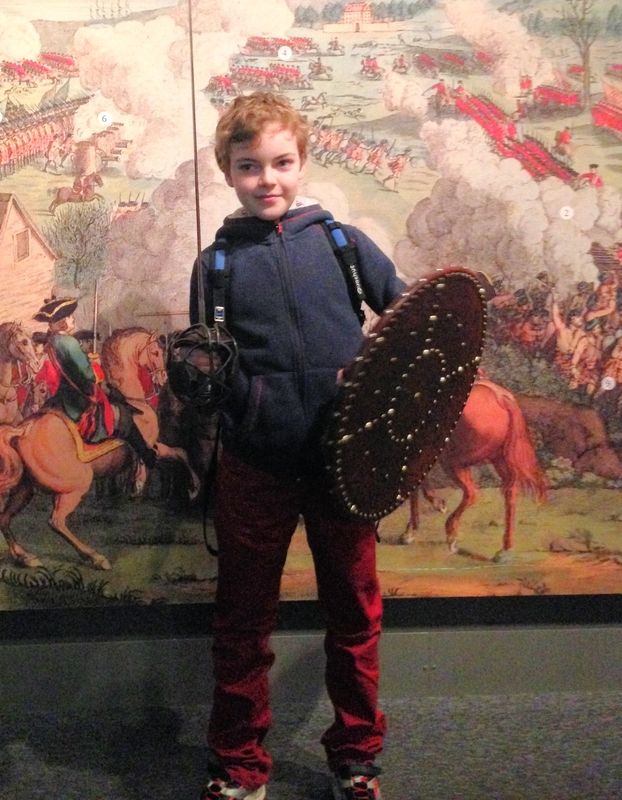
The displays are excellent and easy to see from wheelchair height.  There are interactive elements which the boy liked and an immersive cinema that puts you in the middle of the battle, which was a big hit with him.  At the end is a display of weapons from the battle and he spent about 20 minutes looking at them.  Thanks to some re-enactors from Canada and New York, he got to try a couple of them out.


And then it was out onto the battlefield itself, in our case armed only with GPS enabled audioguides.  

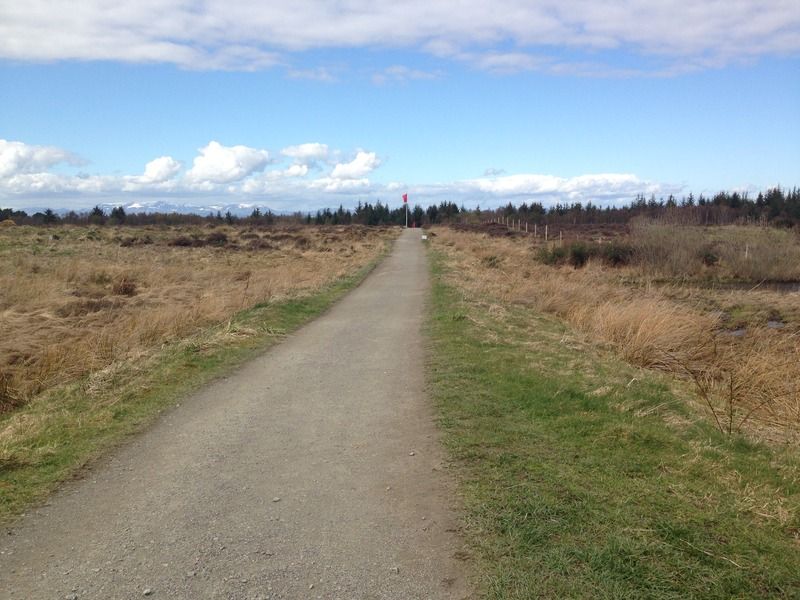
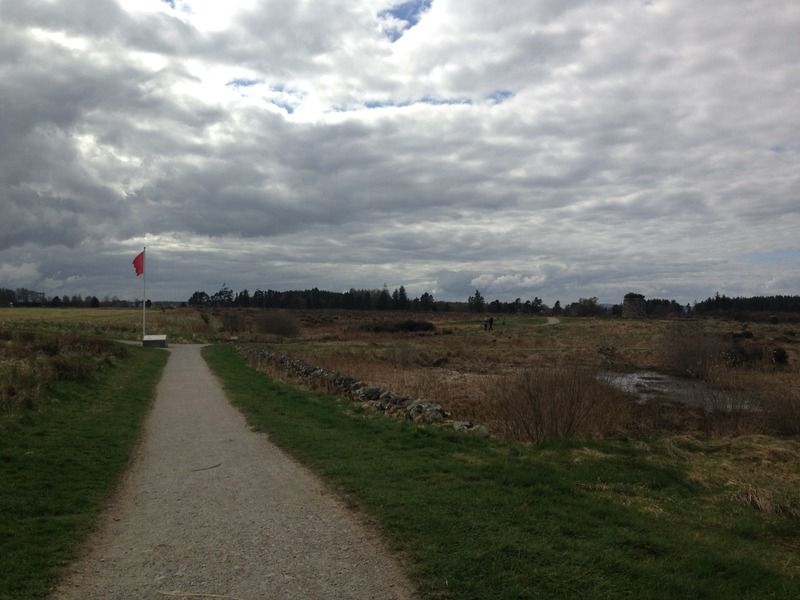
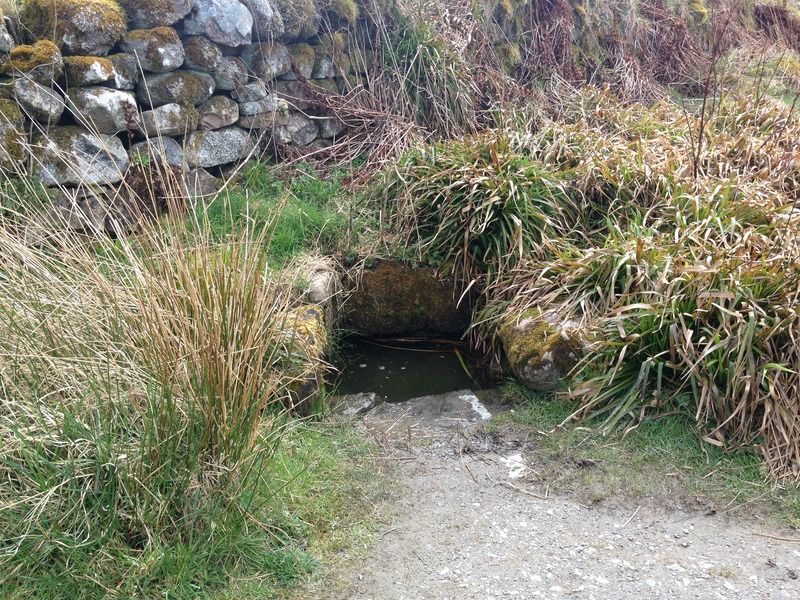
The paths are gravel, but well compacted and fairly smooth - even in April and at the end of a fairly wet week.  The site is not as flat as it first looks (using a wheelchair makes you reassess your definition of "flat"!)  But I made it the whole way round.  The boy gave me a couple of "boosts" (I think he's using Mario as an analogy here!) on some hills, but I didn't really need them.  There was one very small section, by the Well of the Dead, which felt a wee bit tippy, but I made it up that on my own so it can't have been too bad.  


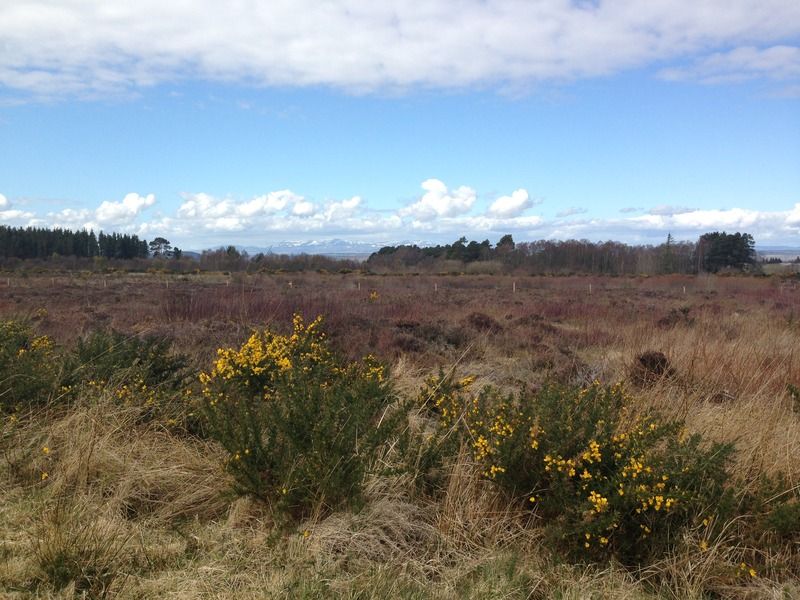
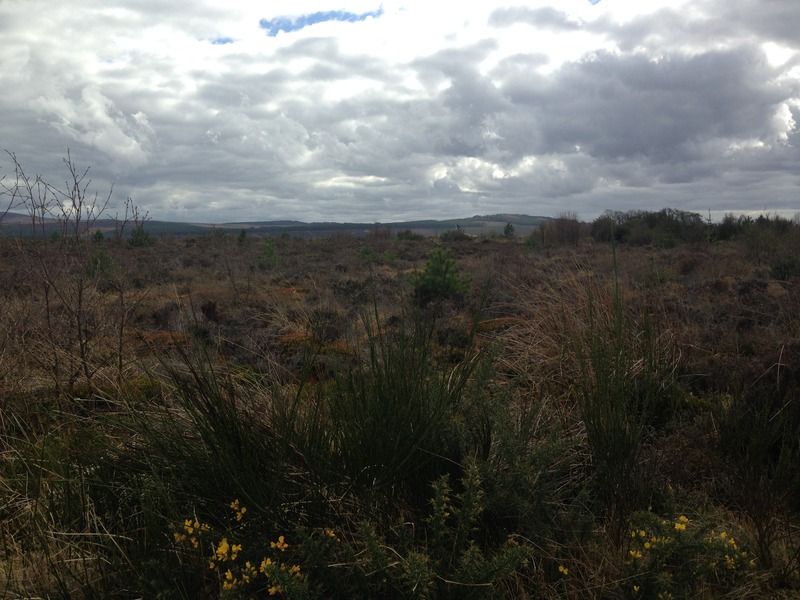
It's a large site and we chose to walk the longer route round (but we didn't walk any of the side paths, which lead to memorial stones).  Google tells me it's a distance of about 2km and includes the areas that the National Trust for Scotland have been returning to moorland - as they would have been in 1746.  


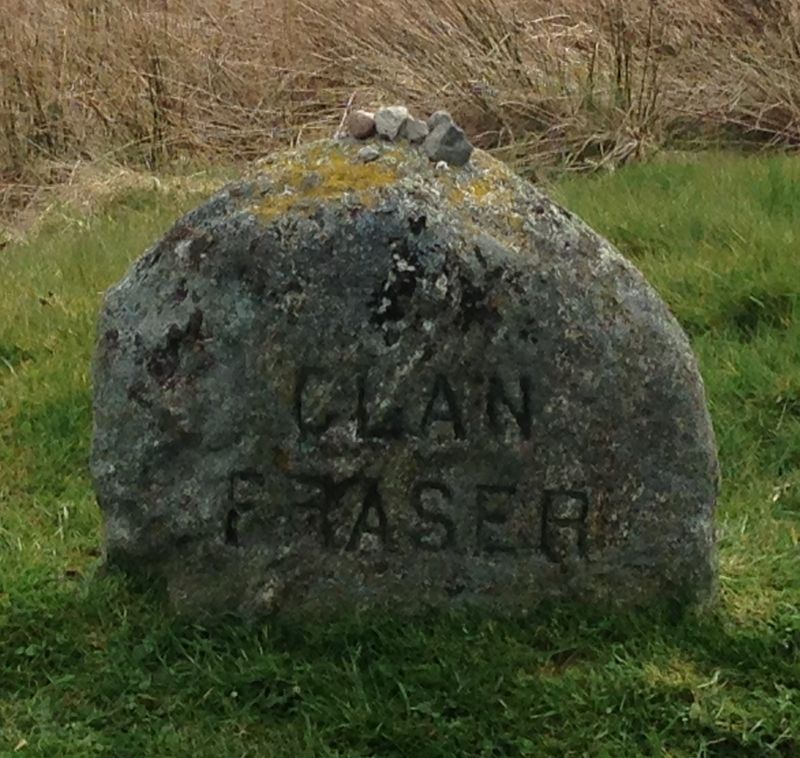
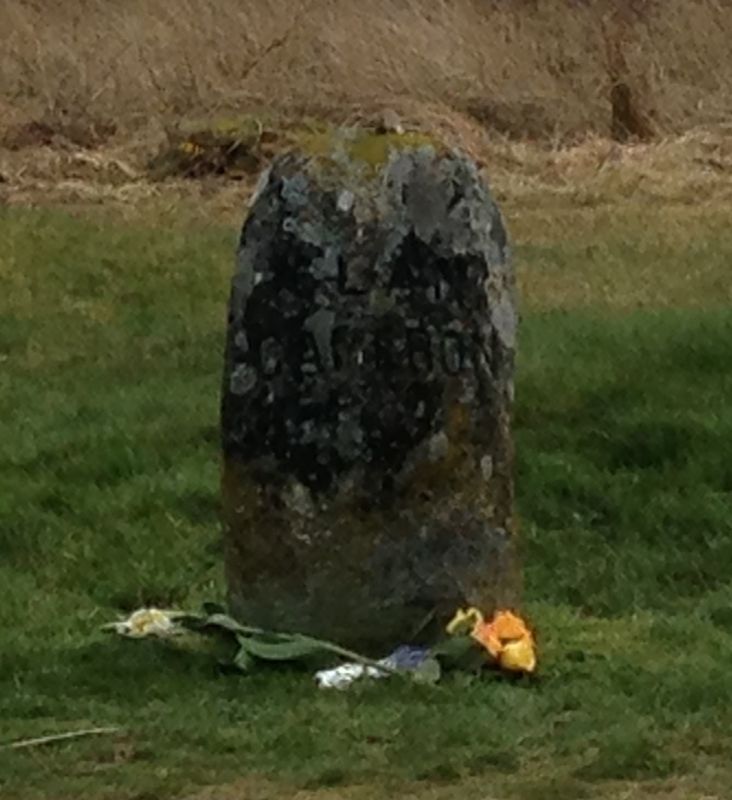
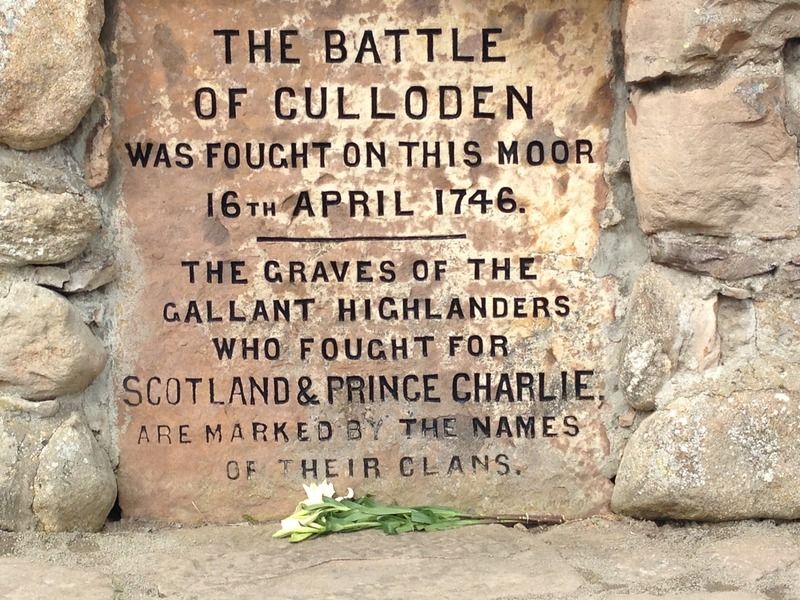
This route takes you along both the Jacobite and Government Lines (marked by blue and red flags respectively) and past most of the main memorials, including the cairn shown at the top of the post.  It was clear there had been some fans of Outlander (which just arrived on TV here) visiting recently, as the Fraser memorial was the only one with wee stones on the top, though some others had flowers (we visited the day after the anniversary of the battle).


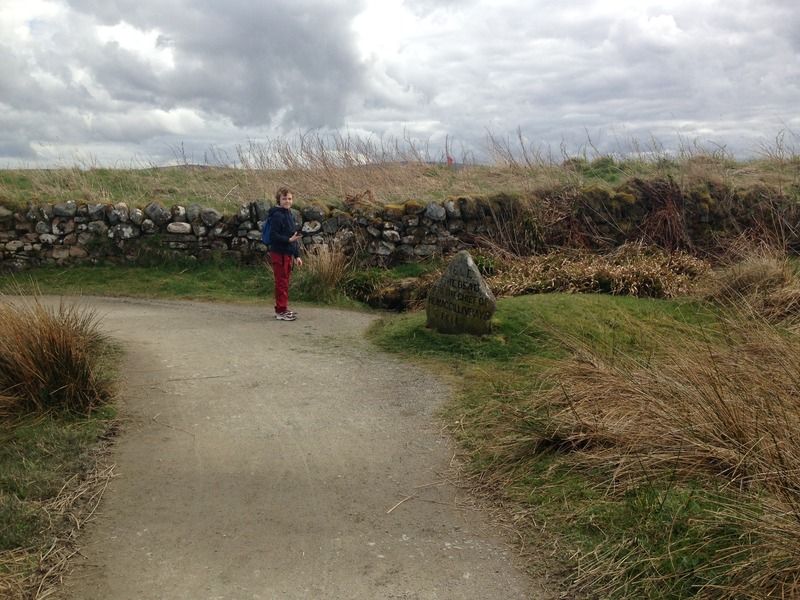
It was by the cairn that I hit the only real problem with access - a section of path that had been resurfaced mere minutes before (there was a tractor there when we started our walk) and hadn't had enough footfall to compact it.  Luckily, the surround grass had been compacted so I could wheel across it instead.  I did get a bit stuck first, though - you can see my attempts to get across on just back wheels before I gave up! 


The last section took us past the Well of the Dead and the audio guide didn't satisfy the boy's curiosity about it.  Not sure I did either.  


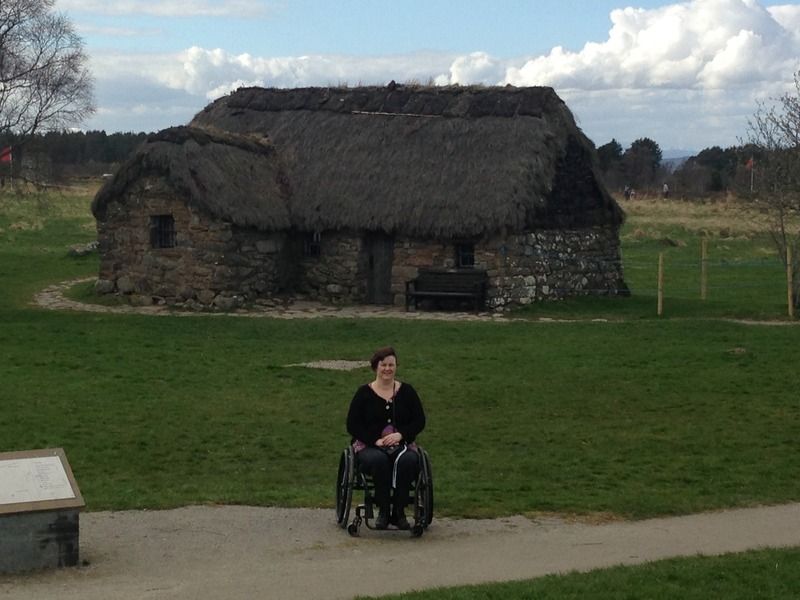
Finally, it was time to bribe the boy so I could get a picture with me in it - this is outside Leanach Cottage, which is the only building on the site which dates from before the battle (Culloden House itself is about 3km away). 


All in all we had a great visit and I was really impressed at how they have managed to make an outdoor, historic site accessible.  A couple of bits would have been easier with something like a Freewheel (particularly the soft sand by the cairn as it was my front wheels that got stuck.  I plan to buy a Freewheel when I have some spare money, but it wasn't essential at Culloden.