This weekend I've been on my first overseas trip with the wheelchair. I was a bit nervous, but did it in a way in which I knew I'd have a bit of support. I've been working with our local twinning association ever since I moved to Scotland, so when I was invited to take part in a trip to the Festival Filmes des Femmes in Créteil I jumped at the chance. Because the trip was being organised with the help of Créteil Jumelages there was someone arranging things for us and they would be with us for the whole trip. I was travelling with two colleagues as well.
We stayed at the Novotel le Lac in Créteil, which I'll do a separate post about and I'll also cover my experiences at the airport separately. Most of the visit was a mixture of official visits (to schools, their fabulous new Mediatheque and the Conservatoire), excellent food and films at the festival.
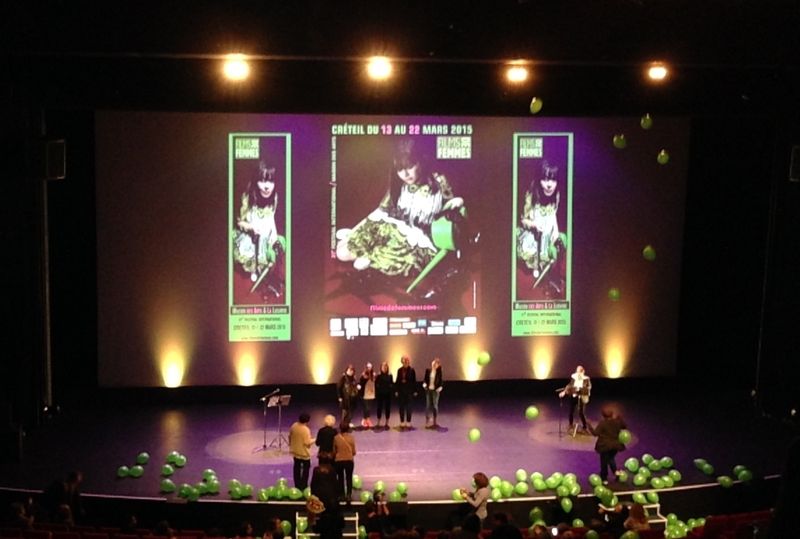
Créteil itself is a new town on the edge of the Paris suburbs. Most of the city has been developed since the 1960s and it is fairly flat, which made it easy to get around. The town centre has a very 70s raised town square area, with carpark under, which is surrounded by the Hotel de Ville, various civic buildings, some flats and the Maison des Arts de Créteil (MAC) where most of the festival took place. Access to this part of town was quite good, although the route from the MAC to the single lift into the carpark was a bit circuitous. The MAC itself was accessible and had a lovely cafe. There was plenty of room to move around. Wheelchair access was to the bottom of the cinema, at the very front, which is normal, however we left the wheelchair at the door and I used my crutches to get down the top couple of steps to get a better view from the front.
Connected to the town square was an enormous shopping centre, which we visited briefly for some shopping and ate at on two evenings (once at a creperie, the second time at Flunch). It was a good shopping centre but again it only had one, small lift, at which queues formed on a Sunday) not as accessible as it should have been.
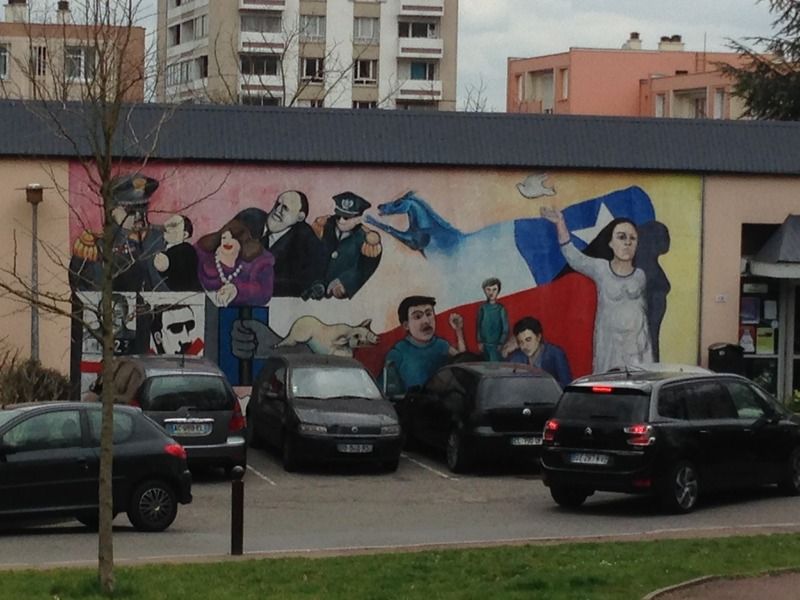
The festival's other venue was a small cinema, La Lucarne, which was located near the Mediatheque in an area of Créteil built in the 1960s, one of the poorer areas of the city. Unfortunately the 1970s building was not very accessible - there was no disabled toilet and it was the only place I absolutely needed to get someone to help push me up the hill (apart from the ramp at the Novotel, which I'll cover in a separate post). However I managed to get into the auditorium for the film, so everything worked out. The mural on the outside of the building was painted by a Chilean artist who fled the Pinochet regime.
The films we saw were Todos estan Meurtes, which eventually one the Youth Jury prize; Sol Branco, the winning short film (which we saw twice); Notre Enfance á Tblisi; the Grand Prix winner Objects in the Mirror and a Beatrice Dalle film, Bye Bye Blondie, which I need to try and watch with subtitles. It was the only one with no subtitles. Todos estan Meurtes and Objects in the Mirror both had English subtitles. Sol Branco and Notre Enfance á Tbilisi had French subtitles which I could sort of follow, so Bye Bye Blondie was the only film I really struggled with.
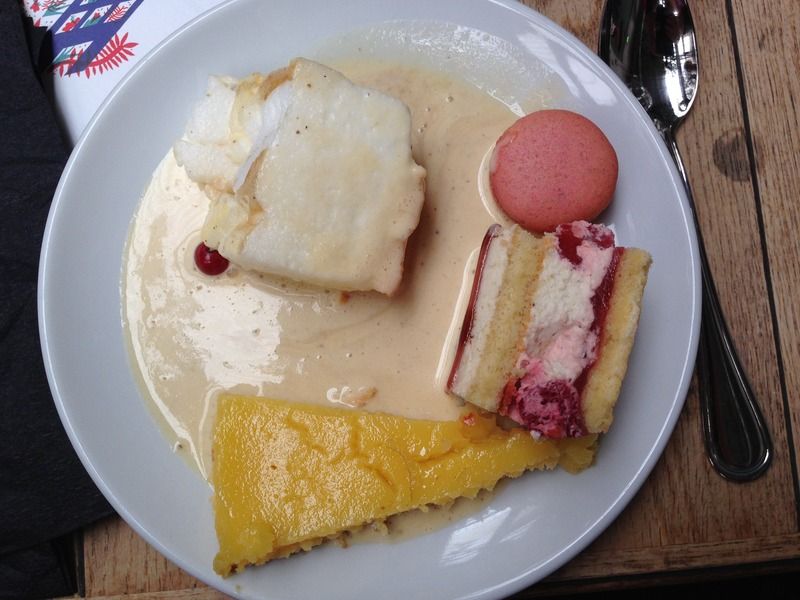
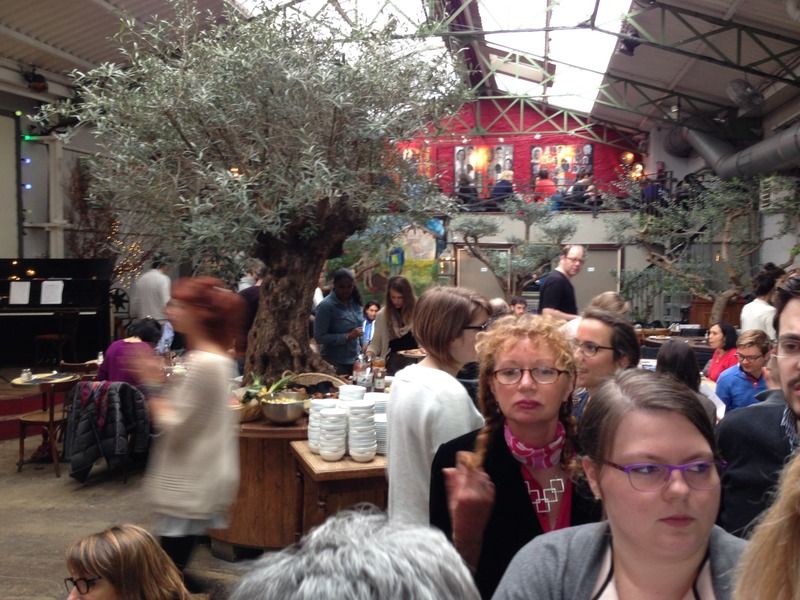
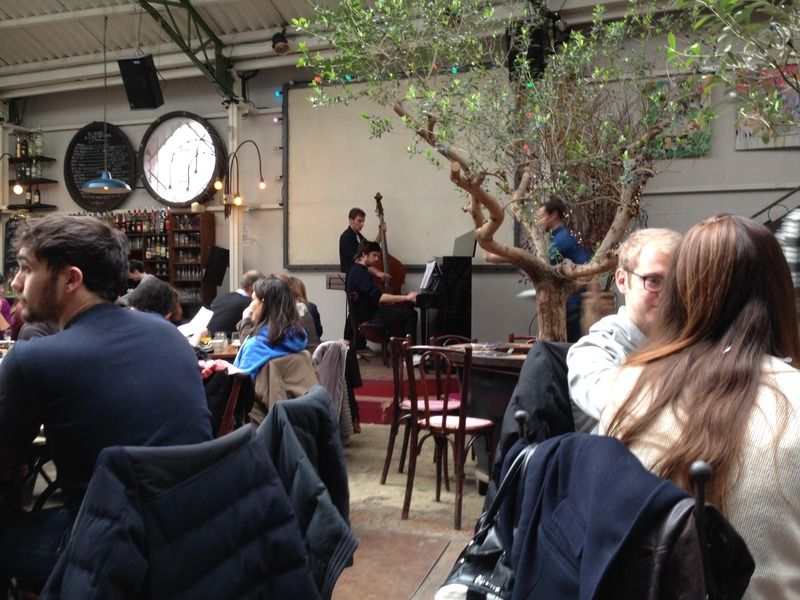
On our "day off" on Sunday we were taken for a brunch at La Bellevilloise it Paris itself. The meal was *amazing*. The venue was wheelchair accessible, in that there was level access and a disabled toilet, but very busy so I was glad I had taken the crutches and could use those instead. I ate way more than I should have (including two desserts!) but look at the food!

The venue was pretty good too.
Our hosts then very generously drove us on a tour of the main sights of Paris, which is as amazing a city as it was last time I was there. I plan to go again.
Tuesday, 24 March 2015
Tuesday, 17 March 2015
Legless in Dublin
On Sunday I went to the Edinburgh Yarn Festival, in my wheelchair and was chatting to Yvonne from Dublin Dye Company (a business she started with an online friend of mine, many years ago). She recommended I check out the Legless in Dublin's blog and I'm so glad she did! I've really enjoyed the quick look at it I've had so far and I'll have to read some more later. I've added a link to the sidebar here so I remember. I found her entry From Sticks to Wheels really caught a lot of how I've experienced the transition, but I think I could add something about the enormous frustration I've been feeling about other people's attitudes to it.
She's also given me some ideas for this blog. First up, but not right now, will be a review of Edinburgh Corn Exchange where the event took place.
Saturday, 28 February 2015
This just impresses me.
It took me too long to figure this out.
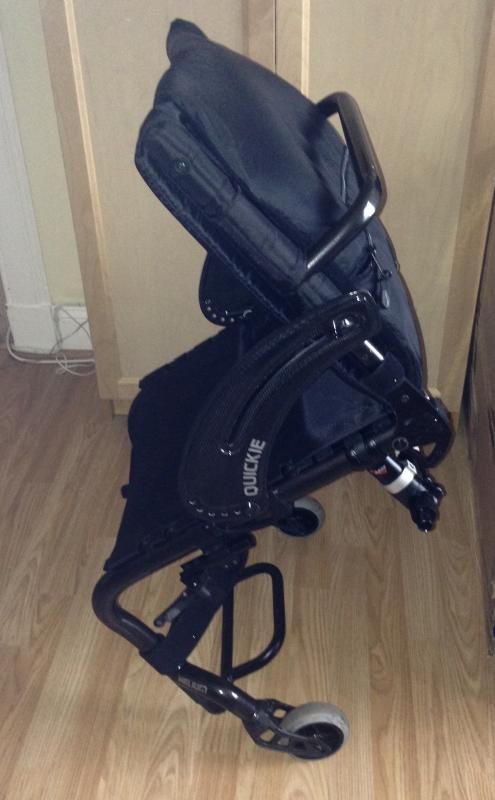
At the moment I need to take the wheels off the chair when putting it in the car. This means a bit of juggling (standing with my weight mostly on one foot, of course) to take the wheels off. Once I made this discovery, though, it got a lot easier...
The chair will balance on the front footplate, not just with the wheels off, as shown, but with either or both wheels on.
Someone thought about that.
At the moment I need to take the wheels off the chair when putting it in the car. This means a bit of juggling (standing with my weight mostly on one foot, of course) to take the wheels off. Once I made this discovery, though, it got a lot easier...
The chair will balance on the front footplate, not just with the wheels off, as shown, but with either or both wheels on.
Someone thought about that.
Product review - Silicone Pushrim/Handrim Covers
One thing I figured out quite quickly was that the standard anodised aluminium pushrims/handrims on my chair were hard to grip, especially in the cold of an Edinburgh January. Gloves helped (and I'll do a separate entry on them) but weren't always practical and I probably won't want to wear them next time I go to Dubai! One afternoon we were having a discussion about silicone bakeware and I went "ah! I know what I need - silicone pushrim covers".
When I got home Google told me such a thing already exists! One of the first pages I found was information on Grippoz, which looked great but sadly are not on the market and their Kickstarter failed to reach it's target.
I found some less innovative options already available though - in a range of colours and a fairly large range of prices from various retailers. In the end I went with plain black ones (because I am boring!) from Mobility Pit Stop. Like all wheelchair accessories, as I am discovering, they were not cheap at just short of £50 including postage, but they were delivered within a couple of days and, to my relief, were very easy to fit.
They've made a massive difference to my hands, which no longer end up stiff because they have been on the freezing cold, hard metal. Pushing is much more effective - making it less effort on the flat and making hills and ramps much easier. So they've been totally work the money. I don't need my gloves unless it's actually cold! I've done a couple of 3-4km outings using them and am very impressed - in particular it was lovely not to have to ask someone to "give me a shove" up a ramp.
One small quibble - they do flick off if I catch them on a tight doorway, which is annoying but easily enough fixed. I suspect making them slightly smaller, so they have to be stretched to put on the rims, would fix this, but make them harder to fit.
I wasn't paid to write this review and I paid for the product myself - if this is ever not the case I will make it clear.
When I got home Google told me such a thing already exists! One of the first pages I found was information on Grippoz, which looked great but sadly are not on the market and their Kickstarter failed to reach it's target.
I found some less innovative options already available though - in a range of colours and a fairly large range of prices from various retailers. In the end I went with plain black ones (because I am boring!) from Mobility Pit Stop. Like all wheelchair accessories, as I am discovering, they were not cheap at just short of £50 including postage, but they were delivered within a couple of days and, to my relief, were very easy to fit.
They've made a massive difference to my hands, which no longer end up stiff because they have been on the freezing cold, hard metal. Pushing is much more effective - making it less effort on the flat and making hills and ramps much easier. So they've been totally work the money. I don't need my gloves unless it's actually cold! I've done a couple of 3-4km outings using them and am very impressed - in particular it was lovely not to have to ask someone to "give me a shove" up a ramp.
One small quibble - they do flick off if I catch them on a tight doorway, which is annoying but easily enough fixed. I suspect making them slightly smaller, so they have to be stretched to put on the rims, would fix this, but make them harder to fit.
I wasn't paid to write this review and I paid for the product myself - if this is ever not the case I will make it clear.
Sunday, 8 February 2015
At the museum
The National Museum of Scotland has an exhibition on computer games at the moment and I've been meaning to take the Small Scottish Boy since it opened. We didn't have any plans this weekend, so we went in today.
I've used wheelchairs in the museum before - both the Red Cross one and one of their own ones - so I was interested to see how my own chair compared in a familiar environment. The answer is, it was a massive difference. It still astounds me just how easy it is to wheel, compared to even the expertly maintained Red Cross chair, let alone the not-maintained museum one.
I didn't get to try it on the challenging entry slope to the new part of the building, as every single disabled parking bay was already in use (and, as ever, not all by people displaying badges). I ended up parking further down Chambers Street and on the other side, meaning I discovered that unfortunately, there are no dropped kerbs anywhere near the main entrance (in the old building) and the kerb is well over the 10cm I practiced at the Westmarc centre. I'm pretty sure it's not actually possible to get up it safely, no matter what the skill level. Many millions have been spent on the museum over the last 20 years - firstly the extension and then the refurbishment of the older part of the building. You'd think someone would have thought of a dropped kerb somewhere near the main entrance.
That said, I don't think access was exactly to the fore of anyone's mind. The building also suffers from a dearth of both disabled/family toilets and lifts (elevators). In particular, the main entrance is served by two small glass lifts and at weekends there are pretty much always queues of families with pushchairs and/or disabled people waiting for them. It took us 15 minutes to get up to the 3rd floor and another 15 minutes to get out. Once you're out of the basement entrance, there are a couple of other lifts in odd corners of the old building, whilst the new part is well served by large lifts (but it has that tricky slope to get in!).
On the plus side, I found our visit way more enjoyable, once we were in, even compared to going round in other wheelchair. So another thumbs up. The exhibition was fun too - we'll go again at least once before it closes, especially since I bought a membership.
I've used wheelchairs in the museum before - both the Red Cross one and one of their own ones - so I was interested to see how my own chair compared in a familiar environment. The answer is, it was a massive difference. It still astounds me just how easy it is to wheel, compared to even the expertly maintained Red Cross chair, let alone the not-maintained museum one.
I didn't get to try it on the challenging entry slope to the new part of the building, as every single disabled parking bay was already in use (and, as ever, not all by people displaying badges). I ended up parking further down Chambers Street and on the other side, meaning I discovered that unfortunately, there are no dropped kerbs anywhere near the main entrance (in the old building) and the kerb is well over the 10cm I practiced at the Westmarc centre. I'm pretty sure it's not actually possible to get up it safely, no matter what the skill level. Many millions have been spent on the museum over the last 20 years - firstly the extension and then the refurbishment of the older part of the building. You'd think someone would have thought of a dropped kerb somewhere near the main entrance.
That said, I don't think access was exactly to the fore of anyone's mind. The building also suffers from a dearth of both disabled/family toilets and lifts (elevators). In particular, the main entrance is served by two small glass lifts and at weekends there are pretty much always queues of families with pushchairs and/or disabled people waiting for them. It took us 15 minutes to get up to the 3rd floor and another 15 minutes to get out. Once you're out of the basement entrance, there are a couple of other lifts in odd corners of the old building, whilst the new part is well served by large lifts (but it has that tricky slope to get in!).
On the plus side, I found our visit way more enjoyable, once we were in, even compared to going round in other wheelchair. So another thumbs up. The exhibition was fun too - we'll go again at least once before it closes, especially since I bought a membership.
Sunday, 1 February 2015
Time for some car shopping.
My Motability contract is coming to an end soon, so the last couple of months have been spent car shopping. This is my third Motability car and once again I get to shop with a friend whose contract ends around the same time - we ordered our first cars together 6 years ago, accompanied by two small boys, walking in saying "we'll have one of those in red and one of those in grey". They're not so small now.
I started my spreadsheet about 3 months ago, having decided on my essentials: cruise control, automatic (I can't manage a clutch), diesel (more economical for the driving I do), some way of plugging in an iPhone or iPod to play music and finally parking sensors. It can be a bit tight in our (shared) driveway, with 4 cars, a transit van and a motorbike. I had a hire car with "beeps" last year and was won over.
That narrowed it down a bit and I started to compare advance payments, fuel economy and features. The arrival of the wheelchair added a criteria - I needed to be able to fit it in the boot (trunk) without taking the wheels off. Whilst it's OK occasionally, on a weekend day when we're going from place to place, often in the rain, doing it every time gets old, quick! So whilst it does fit in my existing car, with the wheels off, I need something bigger.

A few cars went on and off the list but the final shortlist was the Ford Grand C Max, Citroen C4 Piccaso, the Grand C4 Picasso, the Peugeot 3008 and the 5008. A very late addition was the Ford Kuga (aka Escape), which we discovered would fit my wheelchair wheels on and was cool. As my friend (with two kids and a bigger wheelchair) said "someone needs to have a cool car, not a bus or a van!"
In the end, the fuel economy on it wasn't as good and the advance payment (deposit) was high for one with all the features I wanted. In the end, low advance payments and good features meant Peugeot won out and it was down to two cars - the 3008 or the 5008. There's 17cm different in length and two extra seats on the 5008 (though the wheelchair means I couldn't really ever use both). Time for a comparison. I also really like the semi-automatic gearbox the Peugeots and Citroens have - my last two cars (Grand C4 Picasso and latterly a 308) have both been semi-automatics. I'm also clearly a fan of French cars - having owned 2 Peugeots and 5 Citroens.
5008 - more space to the side, but the extra seats folded into the floor makes it higher, so the chair is above the level of the back seat

3008 - the chair fits in, with the back folded, under the parcel shelf. There's marginally less room beside it - the space is narrower, but it's also taller. We have a winner.

I ordered it on Friday, need to go in to do the paperwork one evening this week and it should be here in a few weeks. I've requested an early changeover, if it arrives early, which Motability have approved on the grounds that I'm having to take the wheels off to get my chair in my current car. It will be Shark Grey - a boring colour but one of the three options with the nearest delivery date. It'll look a bit like this.
I started my spreadsheet about 3 months ago, having decided on my essentials: cruise control, automatic (I can't manage a clutch), diesel (more economical for the driving I do), some way of plugging in an iPhone or iPod to play music and finally parking sensors. It can be a bit tight in our (shared) driveway, with 4 cars, a transit van and a motorbike. I had a hire car with "beeps" last year and was won over.
That narrowed it down a bit and I started to compare advance payments, fuel economy and features. The arrival of the wheelchair added a criteria - I needed to be able to fit it in the boot (trunk) without taking the wheels off. Whilst it's OK occasionally, on a weekend day when we're going from place to place, often in the rain, doing it every time gets old, quick! So whilst it does fit in my existing car, with the wheels off, I need something bigger.
A few cars went on and off the list but the final shortlist was the Ford Grand C Max, Citroen C4 Piccaso, the Grand C4 Picasso, the Peugeot 3008 and the 5008. A very late addition was the Ford Kuga (aka Escape), which we discovered would fit my wheelchair wheels on and was cool. As my friend (with two kids and a bigger wheelchair) said "someone needs to have a cool car, not a bus or a van!"
In the end, the fuel economy on it wasn't as good and the advance payment (deposit) was high for one with all the features I wanted. In the end, low advance payments and good features meant Peugeot won out and it was down to two cars - the 3008 or the 5008. There's 17cm different in length and two extra seats on the 5008 (though the wheelchair means I couldn't really ever use both). Time for a comparison. I also really like the semi-automatic gearbox the Peugeots and Citroens have - my last two cars (Grand C4 Picasso and latterly a 308) have both been semi-automatics. I'm also clearly a fan of French cars - having owned 2 Peugeots and 5 Citroens.
5008 - more space to the side, but the extra seats folded into the floor makes it higher, so the chair is above the level of the back seat
3008 - the chair fits in, with the back folded, under the parcel shelf. There's marginally less room beside it - the space is narrower, but it's also taller. We have a winner.
I ordered it on Friday, need to go in to do the paperwork one evening this week and it should be here in a few weeks. I've requested an early changeover, if it arrives early, which Motability have approved on the grounds that I'm having to take the wheels off to get my chair in my current car. It will be Shark Grey - a boring colour but one of the three options with the nearest delivery date. It'll look a bit like this.
Tram
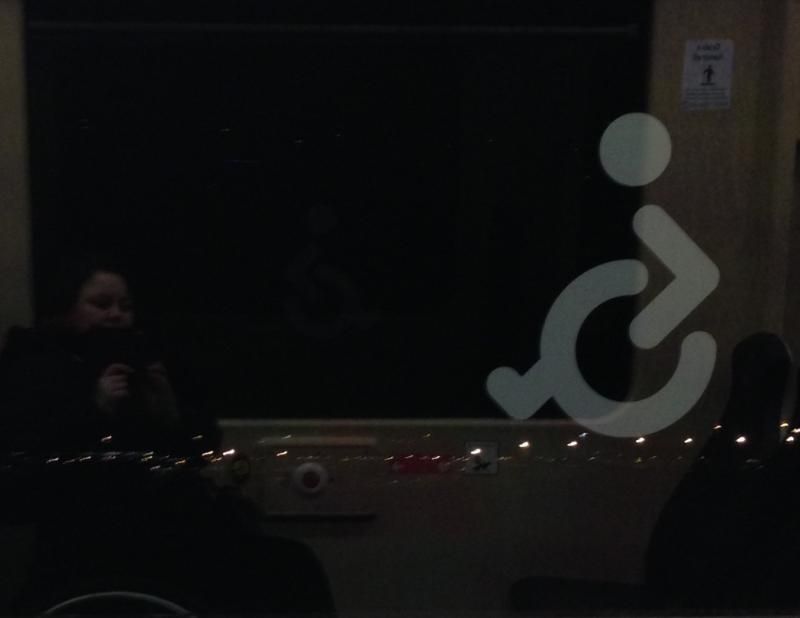
Edinburgh's trams caused chaos and no little controversy (which continues) while being built, but finally started running last spring. I've been on them a few times before, but last week took the wheelchair on for the first time. It was great. The Park and Ride at Ingliston has disabled parking right by the tram stop, though it seems to be a well-kept secret and I hesitate to publicise it! The platforms are all engineered so there's level access, without even enough of a gap for my 4" casters (that's the front wheels) to get caught. There's loads of space (4 wheelchair bays in each tram) and they're quick and smooth. They stop longer (and open the centre doors automatically) if you press the stop button with the wheelchair sympbol. I really love the active user logo they have chosen as well.

Despite it's hills, the main streets of Edinburgh's New Town are built along the hill, so there's no more than a gentle slope as you go along Princes Street and, if you alight at St Andrew's Square, the same is true for George Street. There's a slight hill, beyond me just yet, between the two, but the trams do make both of Edinburgh's main shopping streets accessible to me. Which is just as well because the Council have somewhat misguidedly blocked off half of George Street (and thus half it's disabled parking bays) to create outdoor dining spaces (in Edinburgh!). These have proven less than successful, apart from for a few weeks in August. I can even make it to John Lewis without braving the horrors of it's parking building.
Saturday, 24 January 2015
"You will fall over..."
Lovely OT made it very clear she was expecting me to be an active user of my chair. And take risks. And she also made it very clear that I would tip it over at some point. It's about finding your balance, so it's like riding a bike. You'll fall off a few times. You can add anti-tip wheels to the back of chairs, kind of like training wheels, but they add weight and can prevent you getting up a kerb. So she doesn't fit them.
The inevitable happened on Tuesday night. A good combination of a slightly too steep ramp, rookie mistakes and not paying enough attention. It happened very quickly but I did manage to do what I had been taught, which was to bend my head forward, so I didn't hit it. Surprisingly I didn't really injure myself at all. The back of the chair doesn't have a cross bar that is flush with the back, but one which curves out so there is about 5cm clearance between the back of the chair and bar, so you end up lying on a padded hammock. The only bruises were to my ego.
For now, though, I am being a bit more careful with slightly too steep ramps!
The inevitable happened on Tuesday night. A good combination of a slightly too steep ramp, rookie mistakes and not paying enough attention. It happened very quickly but I did manage to do what I had been taught, which was to bend my head forward, so I didn't hit it. Surprisingly I didn't really injure myself at all. The back of the chair doesn't have a cross bar that is flush with the back, but one which curves out so there is about 5cm clearance between the back of the chair and bar, so you end up lying on a padded hammock. The only bruises were to my ego.
For now, though, I am being a bit more careful with slightly too steep ramps!
Monday, 19 January 2015
Well, hello again
I'm dusting this blog off through a combination of a new year's resolution to blog more and because various things are happening and I thought this is a good place to record them.
Over the last few years I've been thinking hard about the transition to using a wheelchair, at least part of the time. I've been borrowing them at museums and galleries and last autumn hired one from the local Red Cross. The chair I got from them was a basic folding one, of the sort the NHS used to provide, but it wasn't too heavy and I was able to hack it to make it relatively maneuverable - removing the footrests and armrests and half folding the back. It was significantly lighter than the heavy duty ones you find at museums. It got me through a conference and the Scottish Referendum count and sold me on the benefits of getting one. That decided, I started looking at the bewildering range available. You can buy a folding wheelchair for £100 or a lightweight one for £400 and I suspect many people start with these. I was lucky though in that a friend pointed me in the direction of the new NHS wheelchair service National Wheelchair Eligibility Criteria and it seemed like I might be eligible for an energy efficient lightweight wheelchair, so I had my GP write the referral and, after an initial hiccup when I was sent a non-energy efficient chair (within a week!) I had an appointment with a lovely Occupational Therapist (OT) to discuss my needs.
I have to say - I have never been so impressed with an NHS service. And I'm a fan of the NHS.
Lovely OT listened to my views of my disability and discussed with me what might be suitable. She discussed the pros and cons of a lightweight chair and was frank about what I would need to do to use one - that I would need to commit to going through to Glasgow to learn how to use it safely and that it wouldn't be ordered until I had demonstrated I could. It might take 2 or 3 visits to get my skills up. Not a problem.
So, a couple of weeks later I was through in Glasgow, with Lovely OT again, trying out wheelchairs. She had me try a Quickie Life which was amazingly easy to use, compared to the Red Cross one. At the Westmarc centre, they have an obstacle course to try out and the reason they do this was clear as I arrived. Somewhat sadly, an older lady was failing her skills test for an electric wheelchair. The course has a range of surfaces, two ramps of different gradients, a narrow "parking space" and different height kerbs. Here's a picture:

In addition to this obstacle course, the main skill is what are called caster flicks - flicking up your front casters (those dinky wee wheels that are really maneuverable) so you don't get stuck in tram lines or at a kerb. So I got to do that over a broom handle, over the cracks in the pavement, up a 5cm kerb and eventually up a 10cm kerb. The idea is you do them whilst moving - going up kerbs you need the momentum to get the large back wheels up.
Lightweight chairs are very different to standard chairs. The word Lovely OT used was "tippy", which is a good word, because what they want to do, lots, is tip over backwards. So most of the skill involved is learning how to use your upper body to counterbalance them so you don't end up flat on your back (which apparently, everyone does at some point). Lovely OT followed me round, holding a strap attached to the back bar of the chair, to prevent this, and she has given me one to bring home for practicing the hardest skill of all - back wheel balancing. This is different for everyone and very dependent on your weight, but I'm told it's like riding a bicyle - once you learn, it's easy. All I know is it will involve a bit of abdominal muscle development as well!
It turned out I was able to do everything the first time, which I credit to some practice in the Red Cross chair but also to having pretty good upper body strength after 5 years on crutches. So we talked chairs. She ended up ordering me the Quickie Helium - one of the lightest (and therefore tippiest) chairs on the market. I even got to pick the colour (black with faint sparkles) but sadly not the colour of the aluminium bits (I'd have gone for red), which are also black. I picked it up last week, but I think that should be another post.
Over the last few years I've been thinking hard about the transition to using a wheelchair, at least part of the time. I've been borrowing them at museums and galleries and last autumn hired one from the local Red Cross. The chair I got from them was a basic folding one, of the sort the NHS used to provide, but it wasn't too heavy and I was able to hack it to make it relatively maneuverable - removing the footrests and armrests and half folding the back. It was significantly lighter than the heavy duty ones you find at museums. It got me through a conference and the Scottish Referendum count and sold me on the benefits of getting one. That decided, I started looking at the bewildering range available. You can buy a folding wheelchair for £100 or a lightweight one for £400 and I suspect many people start with these. I was lucky though in that a friend pointed me in the direction of the new NHS wheelchair service National Wheelchair Eligibility Criteria and it seemed like I might be eligible for an energy efficient lightweight wheelchair, so I had my GP write the referral and, after an initial hiccup when I was sent a non-energy efficient chair (within a week!) I had an appointment with a lovely Occupational Therapist (OT) to discuss my needs.
I have to say - I have never been so impressed with an NHS service. And I'm a fan of the NHS.
Lovely OT listened to my views of my disability and discussed with me what might be suitable. She discussed the pros and cons of a lightweight chair and was frank about what I would need to do to use one - that I would need to commit to going through to Glasgow to learn how to use it safely and that it wouldn't be ordered until I had demonstrated I could. It might take 2 or 3 visits to get my skills up. Not a problem.
So, a couple of weeks later I was through in Glasgow, with Lovely OT again, trying out wheelchairs. She had me try a Quickie Life which was amazingly easy to use, compared to the Red Cross one. At the Westmarc centre, they have an obstacle course to try out and the reason they do this was clear as I arrived. Somewhat sadly, an older lady was failing her skills test for an electric wheelchair. The course has a range of surfaces, two ramps of different gradients, a narrow "parking space" and different height kerbs. Here's a picture:
In addition to this obstacle course, the main skill is what are called caster flicks - flicking up your front casters (those dinky wee wheels that are really maneuverable) so you don't get stuck in tram lines or at a kerb. So I got to do that over a broom handle, over the cracks in the pavement, up a 5cm kerb and eventually up a 10cm kerb. The idea is you do them whilst moving - going up kerbs you need the momentum to get the large back wheels up.
Lightweight chairs are very different to standard chairs. The word Lovely OT used was "tippy", which is a good word, because what they want to do, lots, is tip over backwards. So most of the skill involved is learning how to use your upper body to counterbalance them so you don't end up flat on your back (which apparently, everyone does at some point). Lovely OT followed me round, holding a strap attached to the back bar of the chair, to prevent this, and she has given me one to bring home for practicing the hardest skill of all - back wheel balancing. This is different for everyone and very dependent on your weight, but I'm told it's like riding a bicyle - once you learn, it's easy. All I know is it will involve a bit of abdominal muscle development as well!
It turned out I was able to do everything the first time, which I credit to some practice in the Red Cross chair but also to having pretty good upper body strength after 5 years on crutches. So we talked chairs. She ended up ordering me the Quickie Helium - one of the lightest (and therefore tippiest) chairs on the market. I even got to pick the colour (black with faint sparkles) but sadly not the colour of the aluminium bits (I'd have gone for red), which are also black. I picked it up last week, but I think that should be another post.
Sunday, 20 July 2014
London (again)
Dusting this off as I have something to say again.
We had another short visit to London last week and I wanted to write something about using public transport in London when disabled. I lived in London on and off for a few years, until about 15 years ago and I used to visit occasionally, for work and leisure, when I lived in England. One of the reasons I started to dislike London was that as I became less mobile, I found travelling there more difficult. The Underground is (or was) notoriously inaccessible and buses were confusing unless you used them regularly.
Lots was obviously done in the lead up to the Olympics, two years ago, to make London more accessible and lifts (elevators, if you are American) have been put into the underground platforms at most of the mainline stations and some others. Central London is still a bit of a blackspot, due to the age of the network. I have some sympathy with Transport for London (TfL) in this regard - retrofitting lifts to a 150 year old station can't be easy and in some cases the use of escalators means the surface station and the platforms aren't anywhere near each other. Going Underground has a great post on this - this classic diagram of Bank illustrates it well.
South Kensington is one station I often have call to use, these days, since a trip to London inevitably means a visit to the Science Museum. We were hoping to also see the Natural History Museum this time, but unfortunately so were several thousand other people and standing in a queue for several hours is not the Small Scottish Boy's idea of fun, nor mine of comfort. So back to the Science Museum it was. Now, South Kensington Station is not at all accessible, especially from the Piccadilly Line. Long banks of escalators and then stairs to street level. Then to get to the museums, a long subway (for American readers, this means a pedestrian walkway that is under a road or similar, not a train, which is of course the Underground, or Tube) to the museums.
Luckily, TfL have a solution. Their website has a brilliant journey planner which allows you to plan a route using any of the city's many transport options (including walking and cycling - it even shows the locations of the famous "Boris Bikes" you can hire all over London). You can customise accessibility options to show routes which avoid stairs, escalators or both and specify your walking speed and maximum walking time and it'll let you save these preferences for future use. If you don't want to venture underground you can also ask it to use any combination of transport or specify which ones you want to use - you might just want to use the DLR or buses, if going underground is a particular problem. It takes into account real time closures, delays, etc on the network - we used it on the Sunday when there was a closure on the DLR and it gave details of the replacement bus. The app works really well on the mobile site (screenshots below) so you can use it on the move - although if you are on the Tube, do put your phone onto airplane mode to stop the battery going flat quickly!
The solution to the South Kensington problem was to take the Jubilee Line to Green Park and then a bus (there were several options) to just outside the Natural History Museum. A word of caution - Green Park has lifts but is one of those stations where the platforms are a long walk from the entrance. Buses might have been better.
As an aside, the Piccadilly line at South Kensington actually had lifts, once upon a time. The station was originally built with lifts instead of escalators (as is still the case at Covent Garden and Russell Square) but due to capacity problems (now a massive problem at Covent Garden) the station was converted to escalators in the 70s. The Abandoned Stations website has details here. That site is a complete time-sink, by the way.
A few years ago TfL were looking at redeveloping the station to include lift access to the Circle and District Line, but not the Piccadilly Line or the museum subway.
Subscribe to:
Posts (Atom)